

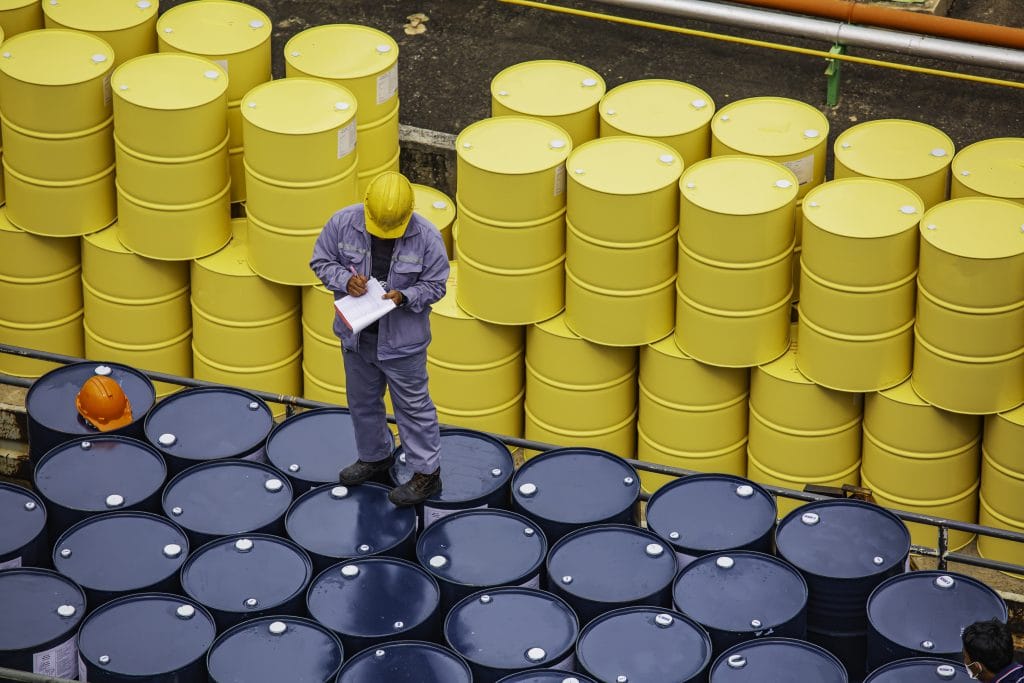
Managing upstream wellheads, midstream compressor stations, and remote pipeline corridors across isolated energy basins presents extreme operational, safety, and logistical challenges. Overcoming these remote complexities requires deploying intrinsically safe mobile architectures with true offline synchronization, GIS pipeline corridor navigation, and automated lone-worker life safety monitoring.
The Extreme Operating Realities of Upstream and Midstream Field Operations
Field technicians, roustabout crews, and instrumentation engineers in remote energy basins—such as the Permian Basin, Queensland’s Surat Basin, or offshore North Sea assets—operate under extreme environmental and hazardous conditions. Personnel frequently travel across unpaved lease roads spanning hundreds of square kilometers where public cellular networks are completely non-existent. At the same time, every active wellpad and separator station constitutes a classified explosive environment (ATEX / IECEx Zone 1 or Zone 2) where non-intrinsically safe electronics represent a catastrophic ignition source.
When operators rely on traditional paper run tickets, printed isolation plans, or disconnected mobile apps that freeze without cellular signal, field safety and operational continuity collapse. Technicians cannot access valve line-up diagrams, gas compressor operating manuals, or real-time SCADA telemetry. Unplanned wellhead shut-ins result in deferred production volumes costing upwards of $50,000 per well daily. Conquering these remote complexities requires an enterprise field operating architecture engineered specifically for the harsh realities of remote energy infrastructure.
Intrinsically Safe Mobile Computing and Offline-First Synchronization
Deploying digital field workflows into explosive hydrocarbon atmospheres requires ruggedized, Class 1 Division 1 / ATEX Zone 1 certified hardware backed by an uncompromising offline-first software architecture.
- Sub-Surface and Wellhead Offline Telemetry: Technicians inspect wellhead Christmas trees, measure tubing pressures, and record pump jack stroke counts offline with full cryptographic data validation.
- Intrinsically Safe ATEX Zone 1/2 Certified Interfaces: Mobile user experiences are optimized for rugged tablets operated while wearing high-impact leather gloves and Nomex flame-resistant PPE.
- GIS Pipeline Corridor and Lease Road Navigation: Integrated offline vector mapping guides field crews along private lease roads, gate combinations, and pipeline rights-of-way without cellular connectivity.
- Automated Lone Worker and Fall-Detection Telemetry: Integrated man-down accelerometers, automated check-in timers, and satellite beacon integration ensure lone-worker safety across isolated well pads.
Field Architecture & Operational Reality
Hazardous Area Mandate: In IECEx Zone 1 hazardous atmospheres, consumer smartphones create severe explosive ignition risks. Field operations software must run natively on intrinsically safe hardware while maintaining complete bi-directional data buffering during days of off-grid operation.
Optimizing Lease Operator Routes and Wellhead Pumping Efficiency
In conventional upstream operations, lease operators (pumpers) follow rigid, calendar-driven driving loops, visiting 30 to 50 well pads daily regardless of whether an asset requires intervention. This static routing burns excessive diesel, inflates vehicle maintenance overhead, and leaves critical failing wells unattended for hours.
Modern field service platforms replace static loops with dynamic exception-based routing. By integrating directly with oilfield SCADA networks (CygNet, Wonderware), the platform continuously evaluates casing pressures, water-cut sensors, and dynamometer rod pump card profiles. Lease operators are dynamically routed only to well pads exhibiting anomalous operating parameters, maximizing wrench time on underperforming assets and boosting overall field production.
Financial and Operational Benchmarks in Remote Oil & Gas Operations
Deploying a unified remote field operations engine delivers significant improvements in production recovery, windshield time reduction, and life safety governance.
| Performance Dimension | Legacy Manual / Paper Process | Etaprise Remote Operations Platform | Quantifiable Operational Impact |
|---|---|---|---|
| Lease Operator Windshield Driving Time | 4.8 hours daily per pumper on static driving loops | 2.3 hours daily via exception-based dynamic dispatch | 52% Driving Reduction |
| Unplanned Wellhead Shut-In Duration | 22 hours average latency to detect and restore well | 3.4 hours automated SCADA exception routing | $480,000 Recovered BOE |
| Lone Worker Life-Safety Check-Ins | Manual radio check-ins prone to missed intervals | Automated biometric and GPS geo-fence tracking | 100% Emergency Coverage |
| Hydrocarbon Production Accounting Sync | 7-day delay compiling physical paper run tickets | Instant batch sync upon satellite or LTE sync | Same-Day Balancing |
Integrating Remote Muster Roll Calls and Emergency Evacuation
When an emergency event occurs—such as a toxic hydrogen sulfide (H2S) gas release, a wellhead blowout, or a regional wildfire threat—knowing the exact real-time location of every employee, contractor, and third-party haulage driver is a matter of life and death.
Etaprise centralizes real-time personnel tracking across remote operational assets. The platform automates electronic muster roll calls at designated safe assembly points. If an alarm triggers, safety coordinators instantly view who has safely checked in at muster points and identify the exact last-known GPS coordinates of any missing personnel, accelerating search and rescue operations during critical golden-hour windows.
Conquer Oil & Gas Complexities with Etaprise
Operating remote hydrocarbon assets requires specialized technology built to withstand the toughest industrial operating environments on earth. Etaprise delivers the offline reliability, safety intelligence, and SCADA connectivity required to keep your remote operations safe, compliant, and highly profitable.
Learn how leading energy producers and oilfield service companies conquer remote operational complexities with Etaprise. Contact our energy sector solutions engineering team today.
Request an Oil & Gas Operations Consultation
Technical Deep Dive: IECEx Hazardous Area Computing and Dual-Mesh Sync
Operating in hazardous hydrocarbon extraction and processing environments requires hardware and software architectures that eliminate explosive ignition risks while operating across thousands of square miles of cellular dead zones. Hydrocarbon wellpads, gas processing manifolds, and crude oil separation facilities are designated as ATEX / IECEx Zone 1 or Zone 2 hazardous areas, where flammable methane, propane, and hydrogen sulfide gases may be present under normal operating conditions.
The enterprise field architecture relies on certified intrinsically safe mobile tablets engineered with hermetically sealed enclosures, low-energy internal circuits, and anti-static polycarbonates that cannot produce sparks or hot spots under electrical fault conditions. The software architecture incorporates dual-mesh synchronization: data is communicated via private 900 MHz field radio networks and satellite transceivers when off-grid, automatically reconciling transaction queues with central corporate CygNet SCADA and SAP PM databases when returning to regional field offices.
Standard Operating Procedure: The 5-Step Process Safety Field Verification
Managing high-pressure hydrocarbon wellpads requires executing rigorous process safety verifications prior to initiating any mechanical intervention or hot work:
- Step 1 — Spatial SIMOPS Conflict Clearance: The lease operator cross-references GIS coordinates with active well completions, wireline units, and construction crews, verifying that no conflicting operations exist within a 500-meter safety radius.
- Step 2 — Calibrated Multi-Gas Atmospheric Testing: The operator tests ambient air for Lower Explosive Limit (LEL), hydrogen sulfide (H2S), and oxygen levels using a bump-tested multi-gas detector, streaming readings directly to the mobile safety permit.
- Step 3 — Mechanical Positive Isolation & Double Block and Bleed: High-pressure valves are locked in the closed position, bleed valves opened to verify zero pressure, and physical blind flanges installed with tagged security seals.
- Step 4 — Photographic Energy Isolation Verification: Technicians photograph every applied lock, bleed gauge, and grounding clamp, submitting the images to the central control room for digital permit activation.
- Step 5 — Commissioning Leak Check & Permitting Closure: Following maintenance, the system is pressurized in controlled stages with bubble-leak or optical gas imaging (OGI) inspections before formal permit surrender.
Enterprise Implementation Playbook: 30-60-90 Day Rollout Plan
Deploying a unified field operations and process safety architecture across upstream oilfield basins requires a phased, risk-managed implementation program:
- Days 1–30: Basin GIS Mapping & Intrinsically Safe Deployment: Digitize private lease roads, gate combinations, and wellpad coordinates; configure ATEX/IECEx certified rugged tablets; and establish offline vector map caches.
- Days 31–60: SCADA Integration & Digital ePTW Activation: Connect field software to CygNet/Wonderware SCADA telemetry, activate automated spatial SIMOPS deconfliction, and train lease operators on mobile run tickets.
- Days 61–90: Full Basin Optimization & LDAR Emissions Tracking: Roll out automated exception-based driving routes, integrate FLIR optical gas imaging cameras for EPA Quad-O compliance, and deploy satellite lone-worker monitoring across all remote field personnel.
Process Safety Governance: API RP 54 Standards and Environmental Defense
Hydrocarbon extraction and processing facilities operate under intense safety scrutiny from environmental and offshore petroleum safety authorities (BSEE, EPA, NOPSEMA, UK HSE). The consequences of hydrocarbon loss of primary containment include catastrophic explosions, environmental devastation, and severe corporate civil and criminal sanctions.
Adhering to American Petroleum Institute guidelines (API RP 54 for drilling safety and API 754 for process safety indicators), Etaprise embeds process safety into every work order. From automated spatial Simultaneous Operations (SIMOPS) conflict analysis to electronic Permit to Work (ePTW) sign-offs and FLIR optical gas imaging (OGI) methane leak logging, the platform creates an indisputable audit trail demonstrating rigorous operational safety stewardship.
Upstream Energy KPI Architecture: Production and Safety Benchmarks
Basin operations executives and asset directors track field operational performance across four vital energy benchmarks:
- Non-Productive Time (NPT) Percentage: Tracking unbudgeted operational downtime across drilling rigs, workover units, and artificial lift systems to minimize production deferrals.
- Mean Time to Restore Wellhead Production (MTTR): The duration required to diagnose, dispatch, and restore an artificial lift or gas-lift well exhibiting abnormal pressure profiles.
- Lease Operator Windshield Time Ratio: Measuring transit driving hours versus productive on-site wellhead optimization hours across remote energy basins.
- LDAR Compliance and Emissions Repair Latency: The average time required to detect, isolate, and repair fugitive methane emissions, ensuring total adherence to statutory EPA Quad-O regulations.
Worked Financial ROI: Non-Productive Time (NPT) and Basin Economics
In upstream energy operations, financial return is determined by barrels of oil equivalent (BOE) recovery and the elimination of workover rig non-productive time. When an artificial lift rod pump fails unexpectedly in a producing well, the operator incurs an average of $85,000 in workover rig intervention costs alongside three to five days of deferred hydrocarbon production worth an additional $45,000 at current market pricing.
By ingesting downhole dynamometer card telemetry and deploying automated exception-based lease operator routing, operators detect fluid pound and mechanical binding weeks in advance. Across a 450-well asset portfolio, doubling artificial lift run life from 14.2 months to 28.6 months eliminates over 180 emergency workover pulls over two years, saving $15,300,000 in direct intervention expenditure and delivering a net operational ROI exceeding 650%.
Enterprise Integration Architecture: Connecting with Core Corporate Backbones
Deploying an enterprise-grade field service operations platform requires seamless interoperability with core corporate IT systems, enterprise resource planning (ERP) backbones, and legacy data warehouses. Field operations cannot operate as an isolated software silo; technician labor hours, consumed inventory parts, asset maintenance histories, and completed job milestone verifications must synchronize with corporate general ledgers and procurement modules in real time.
Etaprise features an open, enterprise-grade API integration gateway supporting bi-directional RESTful and GraphQL interfaces, secure webhook event triggers, and pre-built certified connectors for leading corporate platforms—including SAP S/4HANA, Oracle NetSuite, Microsoft Dynamics 365, Salesforce, and Workday. Enterprise security is enforced through single sign-on (SSO) utilizing SAML 2.0 and OpenID Connect (OIDC) protocols across Okta, Microsoft Azure Active Directory, and Ping Identity, ensuring complete role-based governance and audit compliance across global operations.
Frequently Asked Questions
Etaprise uses a local encrypted SQLite database on rugged mobile devices. All run tickets, safety forms, photos, and meter readings are cached locally. When the device returns to cellular range, satellite uplink, or field camp Wi-Fi, changes sync automatically with transactional delta merging.
The software is fully certified and tested on intrinsically safe mobile devices meeting ATEX Zone 1/2, IECEx Zone 1/2, and NEC Class 1 Division 1 / Division 2 standards from leading industrial hardware partners such as Bartec, Ecom, and Aegex.
Etaprise interfaces with CygNet, Emerson OpenEnterprise, and OSIsoft PI. When telemetry indicates a pump-off condition, high separator pressure, or gas-lift valve failure, the platform automatically queues an inspection for the nearest lease operator.
The mobile application interfaces via Bluetooth with satellite transceivers (such as Garmin inReach or Iridium Edge). Automated check-in prompts, manual SOS alerts, and accelerometer fall-detection signals transmit via low-earth orbit satellite networks when cellular coverage is lost.
Yes. Field haulers and lease operators generate API Chapter 18.2 compliant digital run tickets capturing tank strapping tables, observed gravity, temperature, and BS&W (basic sediment and water) measurements with digital signature verification.