

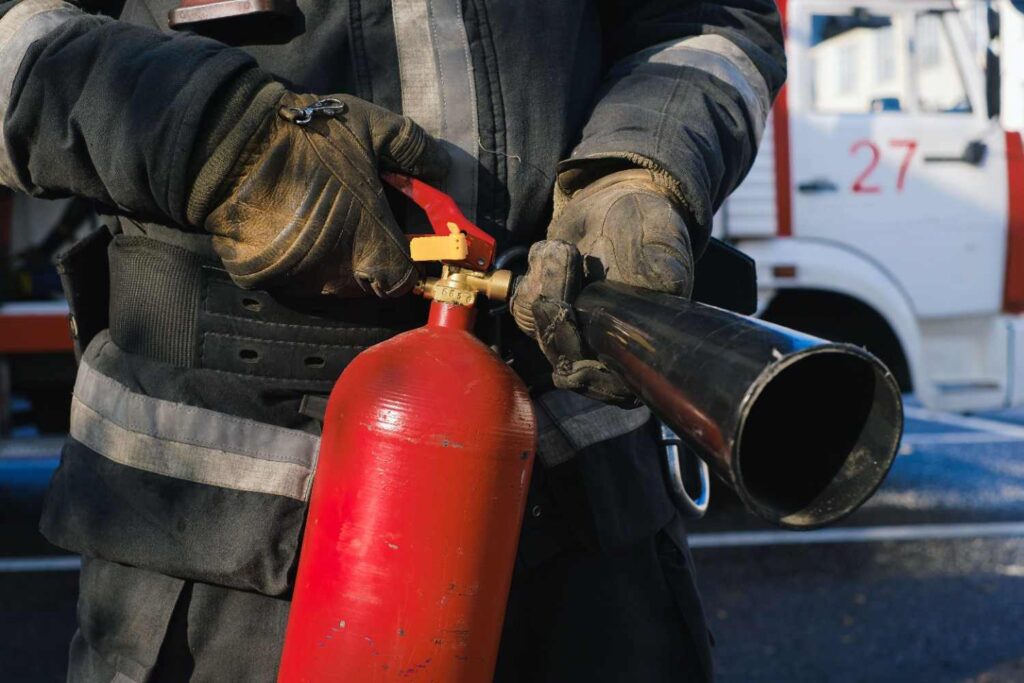
Implementing robust Fire Protection Software Australia is transforming daily field operations for Australian trade contractors. What happens when an Australian fire protection business relies on paper logbooks and manual spreadsheets to manage AS 1851 compliance across dozens of commercial buildings? They risk statutory fines, delayed Annual Fire Safety Statements, and lost defect revenue because paper-based records cannot guarantee the audit-ready evidence that building owners and accredited practitioners now demand.
Adopting specialized Fire Protection Software Australia resolves these operational bottlenecks by turning mandatory maintenance schedules into an automated field workflow. From monthly fire extinguisher inspections to five-yearly deluge valve overhauls, dedicated fire Compliance Software connects field technicians, office schedulers, and building managers through a single mobile platform.
| Operational Challenge | Paper and Spreadsheet System | Fire Protection Software |
|---|---|---|
| AS 1851 Inspection Logs | Physical paper logbooks on site | Digital cloud asset logbooks |
| Defect Reporting | Hand-written notes on job cards | Photo-backed defect quotes |
| Statutory Sign-off | Manual collation for AFSS/Form 16 | One-click accredited practitioner exports |
| Asset Maintenance Intervals | Paper calendar reminders | Automated routine frequency triggers |
Under the Environmental Planning and Assessment (Development Certification and Fire Safety) Regulation 2021, AS 1851-2012 compliance is legally mandatory for Class 1b and Class 2 through Class 9 buildings across New South Wales, with building owners required to maintain audit-ready records for a minimum of seven years. Australian fire contractors who digitize their asset tracking and Inspection Software workflows protect their clients from compliance failures while securing predictable recurring service revenue.
The Etaprise Trade Operations Team – field service management specialists with hands-on experience across Australian plumbing, electrical, HVAC, fire protection, and construction businesses.
Why Do Australian Fire Contractors Require Dedicated Fire Protection Software Australia?
Fire protection software automates AS 1851 inspections by mapping mandatory routine service frequencies (monthly, six-monthly, annual, five-yearly, and ten-yearly) directly to asset barcodes, generating audit-ready digital logbooks on mobile devices. Every test reading, water pressure measurement, and inspection result captured by a field technician populates the building’s permanent asset record in real time, removing paper logbooks entirely.
Managing fire safety compliance across Australia requires strict adherence to state-specific statutory reporting. An accredited fire safety practitioner signing off on a commercial building in Sydney must issue an Annual Fire Safety Statement (AFSS) under NSW regulations, while a contractor in Brisbane produces a Form 16 under Queensland Fire and Emergency Services rules, and a Melbourne contractor provides an Annual Essential Safety Measures Report (AESMR) under Victorian building legislation.
| Jurisdiction | Statutory Form | Regulatory Authority | Key Compliance Requirement |
|---|---|---|---|
| NSW | Annual Fire Safety Statement (AFSS) | Building Commission NSW | FPAS accredited practitioner endorsement |
| QLD | Form 16 / Aspect Inspection Certificate | QLD Fire and Emergency Services | Qualified person verification of measures |
| VIC | Annual Essential Safety Measures Report (AESMR) | Victorian Building Authority (VBA) | Annual audit of AS 1851 maintenance log |
| WA | Annual System Condition Report | Department of Local Government (DFES) | Compliance logbook maintained on site |
| SA | Form 3 / Certificate of Compliance | SA Metropolitan Fire Service (SAMFS) | Verified test records for essential safety |
Purpose-built Fire Protection Software Australia embeds the Fire Protection Accreditation Scheme (FPAS) framework directly into the scheduling engine. Before a technician is assigned to an annual fire damper inspection or pump set flow test, the software verifies that their FPAS accreditation number and specific licence categories (such as Fire Safety Assessment or Fire Safety Inspection) are active and valid.
Pro Tip / Operational Compliance
Takeaway: Under current state building laws, submitting an unverified or incomplete Annual Fire Safety Statement carries council fines of up to $40,000, with potential personal legal liability for building owners and accredited practitioners who endorse unverified systems. Digital verification logbooks are essential for audit defense.
Connecting field technicians to an integrated Job Management platform ensures that statutory forms are generated automatically upon completion of the routine service cycle. Instead of office staff manually transcribing paper inspection sheets into PDF templates, the software compiles verified field data into pre-formatted statutory reports ready for practitioner sign-off, cutting administrative processing time from hours to minutes.
How Does Fire Protection Software Australia Automate AS 1851 Compliance?
Inspection software converts AS 1851 defects into approved repair quotes by allowing field technicians to log non-conformance issues, attach site photos, and select pre-priced repair parts directly from their mobile devices during routine testing. The field-captured defect immediately generates a itemized quote in the office system, sending an electronic approval request to the building manager before the technician leaves the property.
Under AS 1851-2012, maintenance testing requires technicians to categorize every identified issue into distinct statutory classifications. Failing to capture and report these defects clearly creates severe liability for building owners while leaking high-margin repair work for the fire contractor.
| Defect Classification | AS 1851 Definition | Operational Impact | Software Action |
|---|---|---|---|
| Non-Conformance | Minor departure from standard | Documented in maintenance log | Logged for routine review |
| Non-Critical Defect | System operational but impaired | Requires scheduled rectification | Auto-generates priced repair quote |
| Critical Defect | System rendered non-operational | Immediate threat to life safety | Triggers emergency alert to manager |
Traditional paper job cards create a multi-day bottleneck between defect identification and repair approval. A technician inspecting a commercial office building in Parramatta might note a leaking fire hose reel gland and two expired emergency light batteries on a paper sheet. By the time that sheet reaches the office, gets transcribed by admin staff, priced against wholesaler lists, and emailed to the strata manager, three weeks have passed, and the quote is forgotten in an inbox.
Using mobile-first Inspection Software, the technician selects the replacement hose reel gland and batteries from a pre-loaded pricebook, captures photo evidence of the leaking fitting, and submits the defect report. The building owner receives an automated notification containing clear photo evidence and a one-click digital approval button.
PROFIT IMPACT: Industry data indicates that 18% of routine AS 1851 fire inspections uncover repairable defects. For a contractor managing 150 commercial sites with an average defect repair value of $650, capturing and quoting defects on site generates up to $17,550 in additional high-margin repair revenue per inspection cycle that paper systems lose to administrative delay.
Integrating mobile defect capture with your overall Compliance Software ensures that every approved repair automatically updates the building’s asset history. Once the replacement parts are installed, the defect status changes from open to rectified, updating the digital logbook and clearing the building for its annual statutory sign-off without manual record matching.
What Features Are Essential in Mobile Software for FPAS Accredited Techs?
Barcode scans build audit-ready fire asset registers by assigning a unique digital identifier to every piece of fire protection equipment, linking test histories, location coordinates, and service dates directly to that asset’s permanent cloud record. When a technician scans a barcode or RFID tag during a routine inspection, the mobile app loads that exact asset’s AS 1851 testing requirements, preventing missed inspections and phantom testing.
Commercial properties contain hundreds or thousands of individual fire assets distributed across multiple floors, plant rooms, and tenant spaces. Managing a 24-storey office tower in Sydney CBD involves tracking over 400 portable fire extinguishers, 80 fire hose reels, 48 fire hydrants, 120 fire dampers, dual diesel pump sets, and a master Fire Indicator Panel (FIP).
| Asset Category | AS 1851 Routine Frequency | Digital Scan Verification |
|---|---|---|
| Extinguishers and Hose Reels | 6-Monthly and Annual | Barcode scan and pressure check log |
| Fire Hydrant Valves | 6-Monthly and 5-Yearly | Tag scan and hydrostatic pressure test |
| Fire Dampers and Shutters | Annual and 5-Yearly | Asset tag and airflow drop-test report |
| Fire Indicator Panel (FIP) | Monthly and Annual | Panel barcode and zone test log |
| Diesel Fire Pump Sets | Monthly and Annual | Pump tag and battery voltage/flow data |
Manual paper registers routinely suffer from a 15% to 20% ghost asset rate, where equipment is moved during tenant fit-outs or missed during inspections without office knowledge. When a local council or Fire and Rescue authority conducts a spot audit following a building compliance notice, missing asset records lead directly to statutory non-compliance fines.
Scanning assets via mobile Inspection Software eliminates these verification gaps. If a technician attempts to complete a routine service without physically scanning the asset tag on site, the software flags an incomplete test and prevents the job card from closing. This enforces physical attendance and accurate data entry on every site visit.
AUDIT DEFENSE: In the event of a facility fire or regulatory investigation, building owners must prove that every fire safety measure was tested strictly per AS 1851-2012 schedules. A timestamped, GPS-verified digital audit log generated by specialized Compliance Software provides unassailable evidence of statutory compliance.
The asset register also functions as an automated asset lifecycle planner. By recording manufacture dates, pressure vessel test history, and five-yearly overhaul schedules against each scanned barcode, the platform alerts the fire contractor 90 days before major asset replacements or hydrostatic tests fall due, allowing for proactive customer proposals.
How Does Fire Protection Software Australia Improve Quoting and Cash Flow?
Fire protection software improves quoting and cash flow by linking field-logged defects, live wholesaler pricebooks, and accounting integrations into a continuous digital workflow. By eliminating manual data entry between field testing and invoice delivery, fire protection contractors reduce their average invoice turnaround time from weeks to under 48 hours.
Quoting accuracy is a major margin leak for growing fire protection contractors. A technician estimating a commercial fire alarm panel upgrade or sprinkler valve replacement in Brisbane might quote part costs from memory, missing recent 5% to 8% price increases from major fire supply wholesalers such as FlameStop or FireSense. Specialized Fire Protection Software Australia imports live supplier pricebooks directly into the quoting engine, ensuring that every quote reflects current material costs and target profit margins.
Fast, accurate quotes protect profit margins while accelerating client sign-off.
The operational delay between completing a routine AS 1851 inspection and issuing the invoice creates significant cash flow pressure. Benchmark data from CreditorWatch and Xero Small Business Insights shows that Australian trade contractors using paper job cards suffer average payment collection cycles of 32 to 50 days. For a fire contractor turning over $1.8 million annually, that administrative lag locks up between $150,000 and $250,000 in outstanding receivables.
| Cash Flow Stage | Manual Spreadsheet System | Integrated Job Management Platform |
|---|---|---|
| Defect Quoting | 3 to 14 days office delay | Immediate mobile quote submission |
| Routine Invoice Creation | Manual batch invoicing at end of month | Automated invoice trigger on sign-off |
| Accounting Integration | Manual re-keying into Xero or MYOB | Instant 2-way API sync |
| Aged Debt Tracking | Manual spreadsheet review | Automated email payment reminders |
Connecting your field testing software to your accounting platform via Job Management API links resolves this cash flow drag. As soon as a technician completes a routine service and captures the customer’s digital sign-off on site, the software triggers a draft invoice in Xero or MYOB, complete with itemized asset service details and attached compliance certificates.
LEAD-GEN ASSET: Want to calculate how much your fire protection business is losing to delayed invoicing and unquoted defects? Use the Etaprise ROI Calculator to see your projected cash flow recovery in under two minutes.
For commercial contractors managing multi-site property portfolios for facility managers or strata companies, integrated client management maintains a complete history of quotes, asset registers, inspection reports, and invoices under a single customer master account. Whether servicing ten sites across Sydney or fifty sites nationally, office managers can review portfolio-wide compliance and outstanding receivables from a single dashboard.
Your Next Step: Eliminate Compliance Risk and Defect Revenue Leaks
Fire protection contractors running AS 1851 routines on paper logbooks pay an escalating tax in manual administration, missed defect quotes, and compliance exposure. With statutory building regulations in NSW, Queensland, and Victoria demanding audit-ready evidence and accredited practitioner endorsement, modern field service management is no longer optional. Purpose-built Compliance Software secures your client asset records, automates statutory form generation, and accelerates your cash flow from a single mobile platform. Book a Free Demo with Etaprise today to see how your fire protection business can eliminate paperwork and scale profitably.
Ready to Modernise Your Trade Operations?
Eliminate paperwork bottlenecks, automate field compliance, and speed up invoicing across Sydney, Melbourne, Brisbane, and beyond.
Frequently Asked Questions
Fire protection software is built around statutory compliance frameworks like AS 1851-2012. It manages mandatory inspection routines (from monthly to ten-yearly cycles), embeds Fire Protection Accreditation Scheme (FPAS) practitioner validation, generates state statutory compliance documents (NSW AFSS, QLD Form 16, VIC AESMR), and tracks asset-level test histories via barcode scanning. Generic field service apps provide job scheduling and basic invoicing but lack the specialized compliance logic required for licensed fire safety maintenance.
When a council or fire authority requests proof of compliance, the software generates a complete, timestamped digital audit trail for every asset in the building. Instead of searching through physical paper logbooks on site, the platform produces an exportable digital maintenance record showing inspection dates, technician FPAS accreditation details, test readings, and rectified defect histories covering the mandatory seven-year retention period required under state building regulations.
Yes. Mobile Inspection Software designed for fire protection operates with full offline functionality. Field technicians can scan asset barcodes, log AS 1851 defect classifications (Non-Conformance, Non-Critical, Critical), capture photo evidence, and select replacement parts from wholesaler pricebooks without an active cellular connection. Once the technician returns to mobile coverage, all field data syncs automatically to the cloud office system.
The platform connects to Xero and MYOB via two-way API links. When a technician completes a routine inspection or defect repair and captures the customer’s digital signature on site, the job management platform automatically creates a draft invoice in your accounting software. Material costs, labour hours, and compliance certificates attach directly to the invoice, allowing your office staff to send invoices instantly without manual data re-entry.
Most 8 to 20-technician fire protection businesses complete data migration and field onboarding within 7 to 14 business days. Implementation specialists import your existing client accounts, building asset registers, and wholesaler pricebooks (from FlameStop or FireSense), configure your state statutory report templates, and conduct hands-on mobile training for your field technicians to ensure zero disruption to ongoing inspection schedules. In conclusion, adopting dedicated Fire Protection Software Australia gives commercial fire contractors the asset-level visibility, statutory compliance precision, and cash flow speed required to build a scalable, audit-ready trade business.