

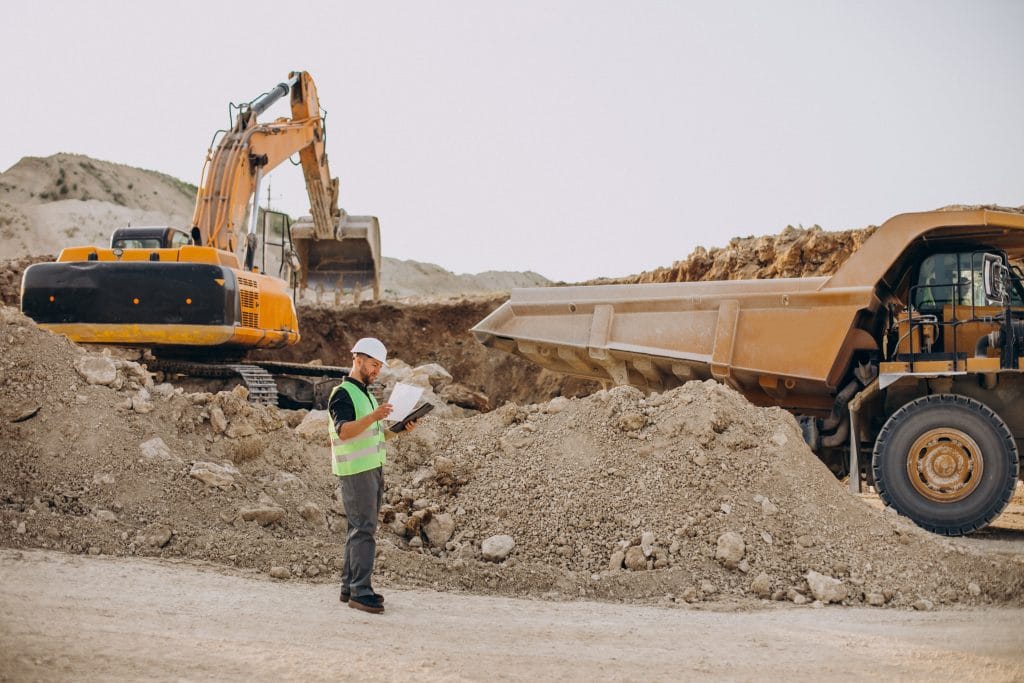
Building a culture of continuous improvement in commercial construction requires transforming raw job site data into actionable operational feedback loops. By replacing anecdotal end-of-project post-mortems with real-time field analytics, Tier-1 and Tier-2 contractors systematically eliminate labor variance, reduce structural rework, and elevate on-site safety standards.
Why Lean Construction Demands Real-Time Operational Feedback
Lean construction methodologies, such as the Last Planner System (LPS), depend fundamentally on tracking Percent Plan Complete (PPC) and conducting immediate root-cause analysis on weekly work plan failures. When construction teams track PPC on physical whiteboards or static spreadsheets, the data arrives too late to influence the critical path. Superintendents often spend their weekly subcontractor coordination meetings debating historical fault rather than resolving systematic field constraints.
Continuous improvement cannot survive in an environment where field data is trapped in paper daily logs or isolated supervisory memories. By digitizing job site events at the point of activity, contractors capture the root causes of daily schedule variance—whether rooted in material delivery delays, uncoordinated crane picks, missing engineering details, or subcontractor absenteeism. This visibility allows project leaders to implement rapid countermeasures before minor field variances compound into liquidated damages.
Core Pillars of an Industrial Kaizen Culture on Job Sites
Instilling a high-performance continuous improvement mindset across distributed construction sites requires standardizing daily operational habits and establishing objective, transparent performance metrics.
- Digital Morning Daily Huddles: Foremen conduct structured 10-minute stand-ups reviewing digital safety pre-starts, hazard identifications, and daily production targets directly from mobile tablets.
- Closed-Loop Constraint Management: Field supervisors identify upcoming material or engineering constraints 3 weeks in advance, assigning owners and tracking resolution milestones within the central platform.
- Standardized Work Method Statements (SWMS): Digital templates ensure every trade adheres to validated, peer-reviewed execution steps, preventing ad-hoc practices that cause safety incidents or defects.
- Empowered Field-Level Problem Solving: On-site tradespeople can flag process bottlenecks and suggest workflow optimizations directly through the field application, receiving transparent management feedback.
Pro Tip / Architecture
Continuous Improvement Framework: When implementing lean construction, never penalize crews for logging task constraints. Tracking reasons for non-completion (RNC) across 1,000+ work packages reveals whether scheduling friction is driven by procurement latency, engineering RFIs, or trade coordination.
Measuring Operational Waste: Labor Burn Rates and Trade Productivity
In commercial construction, wrench time—the percentage of time craft labor spends actively installing materials—often hovers between 35% and 42%. The remaining working hours are consumed by walking to remote site laydown yards, searching for tools, awaiting engineering clarification on RFIs, or waiting for predecessor trade handoffs.
Continuous improvement platforms measure these non-productive intervals by analyzing geo-located labor timecodes against task milestones. When analytics indicate that a mechanical subcontractor’s installation rate drops 30% on upper-floor packages, managers can immediately trace the root cause to hoist access limitations or laydown congestion, enabling rapid logistical re-sequencing.
Continuous Improvement Benchmarks Across Commercial Construction
Transitioning from reactive firefighting to systematic continuous improvement generates quantifiable gains across schedule reliability, safety compliance, and direct labor overhead.
| Performance Metric | Traditional Reactive Baseline | Etaprise Lean Operations Platform | Quantifiable Gain |
|---|---|---|---|
| Percent Plan Complete (PPC) | 54% average weekly task completion reliability | 88% verified weekly task execution rate | +34% Schedule Reliability |
| Wrench Time Efficiency | 38% productive craft installation time | 56% optimized craft productivity | +18% Direct Productivity |
| Punch List Closure Duration | 42 days average to resolve final handover items | 9 days with real-time field verification | 78% Faster Handover |
| Near-Miss Reporting Volume | Under-reported, lagging incident tracking | Proactive digital micro-reporting by all crews | Zero Lost-Time Injuries |
Standardizing Lessons Learned Across Multi-Project Portfolios
The true power of enterprise continuous improvement emerges when lessons learned on one project automatically inform future tenders and operational plans. Historically, when a complex structural beam post-tensioning sequence experienced delays on a Brisbane commercial tower, that hard-won operational insight remained trapped within that specific project team. The contractor’s Melbourne division would often encounter the identical failure mode six months later.
Etaprise centralizes cross-project data into an enterprise operational knowledge repository. Root-cause categorization, subcontractor performance scorecards, and verified productivity rates directly calibrate company estimating models and standard operating procedures (SOPs). This organizational learning curve ensures that bidding accuracy sharpens over time, margins are protected, and operational excellence becomes an institutional asset rather than an individual superintendent’s skill.
Partner with Etaprise for Operational Excellence
Building a culture of continuous improvement is an ongoing engineering and cultural discipline. By equipping your site supervisors, project directors, and trade partners with intuitive mobile intelligence tools, Etaprise turns routine job site execution into a self-optimizing engine of profitability and safety.
Discover how your enterprise can standardize lean construction metrics, protect project margins, and streamline field reporting. Connect with our enterprise solutions architecture team through our contact page to explore a tailored demonstration.
Explore Continuous Improvement Workflows
Technical Deep Dive: Integrating Subcontractor Work Packages with 4D BIM
Modern commercial project controls require connecting physical site execution with four-dimensional Building Information Modeling (4D BIM) and Critical Path Method (CPM) scheduling baselines. In conventional construction delivery, superintendents review static 2D PDF drawing sheets and Gantt charts that fail to convey spatial congestion. When multiple trade contractors—such as structural formwork carpenters, post-tensioning crews, and mechanical rough-in specialists—converge on the same elevated floor slab, physical work fronts clash.
An enterprise field operations engine synchronizes mobile work packages directly with the federated BIM geometry (IFC and Autodesk Revit files). Field supervisors access 3D spatial models on ruggedized tablets, visualizing upcoming trade installations chronologically. When an upstream mechanical duct riser installation is completed ahead of schedule, the platform automatically validates geometric tolerances via mobile photogrammetry and issues a digital handover ticket to the framing subcontractor. By eliminating manual coordination latency, projects reduce schedule compression risks and maintain smooth critical path velocity.
Standard Operating Procedure: The 5-Step Digital Daily Log Workflow
Transforming job site compliance requires establishing an unyielding daily operational routine for field superintendents, project engineers, and trade foremen. The standardized digital execution cycle comprises five mandatory steps:
- Step 1 — Morning Pre-Start Briefing & Geo-Verification: Foremen conduct 10-minute digital tailboards, verifying subcontractor headcount, reviewing high-risk activity permits (working at heights, hot work, crane operations), and logging weather conditions automatically via local meteorological API feeds.
- Step 2 — Continuous Material Receipt & Consignment Staging: Laydown yard managers scan delivered steel reinforcement bundles and precast panels via mobile barcode, verifying delivery dockets against structural procurement purchase orders before authorizing offloading.
- Step 3 — In-Situ Photographic Quality & Witness Point Capture: As structural rebar cages and conduit rough-ins are placed, engineers capture timestamped high-resolution photos tied to specific column grids, satisfying client inspection and test plan (ITP) witness requirements.
- Step 4 — Real-Time Production Quantity & Labor Hour Logging: Trade leaders record completed quantities (e.g. square meters of concrete placed, linear meters of pipe hung) alongside verified labor hours, establishing empirical productivity baselines.
- Step 5 — Automated Evening Shift Harmonization: The platform compiles daily events into an executive Daily Progress Report (DPR), highlighting open constraints, potential variation notices, and critical path variances for project director review.
Enterprise Implementation Playbook: 30-60-90 Day Rollout Plan
Deploying a unified field operations architecture across multi-site commercial contracting operations requires a disciplined, phased transformation strategy:
- Days 1–30: Core Foundation & Pilot Asset Configuration: Integrate master cost codes with corporate ERP (Procore, Viewpoint, SAP), standardize digital ITP and safety inspection forms, and deploy mobile hardware to a single flagship pilot project.
- Days 31–60: Subcontractor Portal Integration & Telematics Sync: Onboard primary trade partners through external contractor portals, connect heavy equipment CAN-bus telematics gateways, and automate daily progress log compiling.
- Days 61–90: Full Portfolio Rollout & Predictive Analytics Activation: Expand deployment across all active commercial project sites, train regional superintendents, activate automated variation recovery workflows, and calibrate corporate estimating models with historical field productivity data.
Regulatory Shields: SOPA Compliance and Contractual Dispute Mitigation
Commercial construction contractors operate under strict statutory payment frameworks, such as Security of Payment Acts (SOPA) in Australia and statutory prompt payment acts in the UK and North America. When progress claims, variation directions, or extension-of-time (EOT) claims lack contemporaneous site documentation, contractors forfeit statutory payment protections or face crippling adjudication determinations.
Etaprise functions as a legal and commercial shield for commercial builders. Every site instruction, variation directive, crane delay log, and weather event is recorded with immutable GPS coordinates, high-resolution photographs, and digital subcontractor signatures. When dispute adjudications or client payment claims arise, project teams export certified, time-stamped evidentiary dossiers that prove contractual entitlement and protect enterprise cash flow.
Enterprise Construction KPI Architecture: Core Performance Metrics
Executive leadership and commercial directors evaluate project portfolio health across four primary operational indices:
- Schedule Performance Index (SPI): Calculated daily by comparing completed work breakdown structure (WBS) milestones against planned baseline progress, pinpointing emerging critical path delays before they impact practical completion.
- Cost Performance Index (CPI): Real-time tracking of actual labor and equipment burn rates against earned value, ensuring gross margin targets are rigorously defended throughout project execution.
- Subcontractor Non-Conformance Rate (NCR/sqm): Normalizing defect occurrences across subcontractor trades and square footage, highlighting quality risks during active construction.
- Variation Recovery Velocity: The average duration required to price, submit, and secure client sign-off on field variation directives, accelerating working capital recovery.
Worked Financial ROI: The Commercial Mathematics of Field Modernization
To understand the true commercial leverage of modernizing construction field operations, consider a mid-sized commercial contractor managing 50 field personnel across three active job sites. Under traditional manual operations, each site superintendent spends an average of 2.5 hours every evening transcribing handwritten notes, correlating delivery dockets, and chasing subcontractor timesheets. At a fully burdened superintendent rate of $95 per hour, this administrative burden consumes $237.50 per superintendent per day—or over $178,000 annually in pure administrative overhead across the company.
By deploying mobile digital daily logs, automated crane mobilization tracking, and instant variation capture, administrative time is reduced by 78%, recovering over $138,000 in direct management capacity. More crucially, eliminating uncoordinated trade stacking and recovering unbilled client variations recovers an average of $229,500 in direct project margin annually, delivering a comprehensive return on investment (ROI) exceeding 420% in the first twelve months of deployment.
Enterprise Integration Architecture: Connecting with Core Corporate Backbones
Deploying an enterprise-grade field service operations platform requires seamless interoperability with core corporate IT systems, enterprise resource planning (ERP) backbones, and legacy data warehouses. Field operations cannot operate as an isolated software silo; technician labor hours, consumed inventory parts, asset maintenance histories, and completed job milestone verifications must synchronize with corporate general ledgers and procurement modules in real time.
Etaprise features an open, enterprise-grade API integration gateway supporting bi-directional RESTful and GraphQL interfaces, secure webhook event triggers, and pre-built certified connectors for leading corporate platforms—including SAP S/4HANA, Oracle NetSuite, Microsoft Dynamics 365, Salesforce, and Workday. Enterprise security is enforced through single sign-on (SSO) utilizing SAML 2.0 and OpenID Connect (OIDC) protocols across Okta, Microsoft Azure Active Directory, and Ping Identity, ensuring complete role-based governance and audit compliance across global operations.
Frequently Asked Questions
Superintendents and trade foremen generate committed weekly work plans. Each day, task completion is validated with photo evidence and quantity measurements. Unfinished tasks require selecting an explicit Reason for Non-Completion (RNC), automatically calculating weekly PPC and highlighting systematic operational friction.
Etaprise streamlines reporting to under 30 seconds via voice-to-text and rapid mobile photo capture. By removing bureaucratic paperwork and implementing transparent, non-punitive management feedback loops, teams celebrate hazard detection as a proactive contribution to project safety.
Yes. Historical production rates, actual labor hours per linear meter or square meter of installation, and equipment burn rates are aggregated across completed jobs and exported via API into estimating platforms, preventing future under-bidding or margin erosion.
When a delay occurs, Etaprise links the incident to predecessor task logs, site access timestamps, and material delivery records. This objective, chronological audit trail identifies whether the delay was caused by predecessor trade handoffs, access delays, or supplier failures, eliminating finger-pointing.
The mobile interface is designed specifically for rugged construction tablets and smartphones, utilizing high-contrast touch targets, offline functionality, and simple three-tap logging workflows. Typical field foremen reach full operational proficiency within two 30-minute training sessions.