

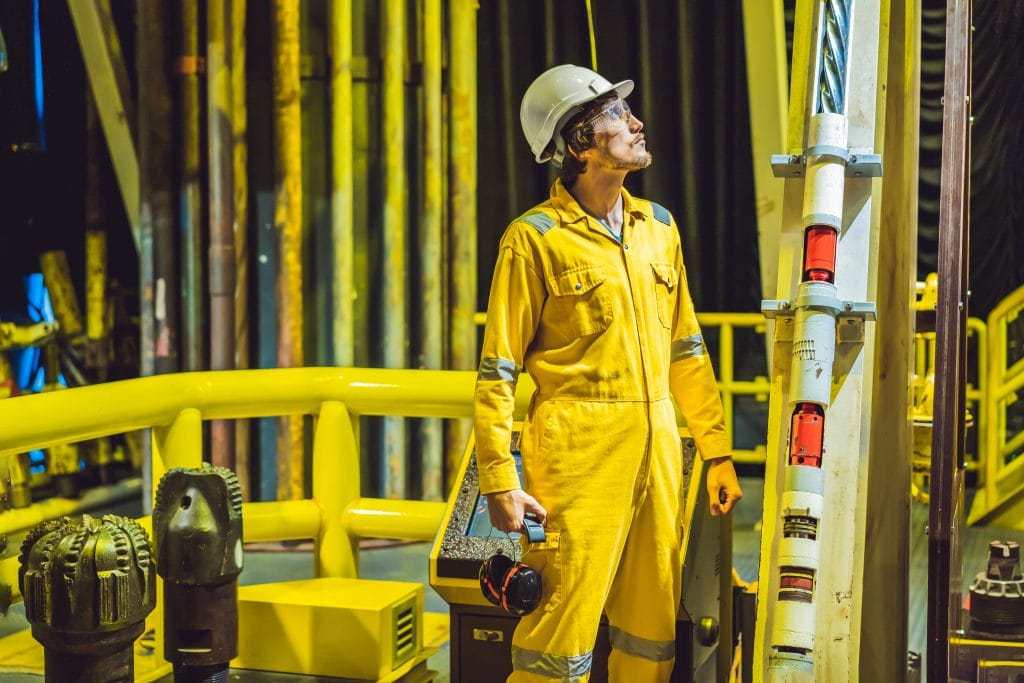
In upstream drilling, well completion, and pipeline maintenance, miscommunication during simultaneous operations (SIMOPS) introduces catastrophic process safety risks. Establishing seamless operational collaboration demands integrating electronic Permit to Work (ePTW) systems, real-time energy isolation verification, and structured contractor coordination across every active asset.
The Dangerous Dynamics of Simultaneous Operations (SIMOPS)
Modern wellpad and offshore platform environments feature intense multi-trade congestion. On a single multi-well pad, drilling operations occur concurrently with hydraulic fracturing, wireline logging, production facilities construction, and coiled tubing cleanouts. Each trade brings heavy mobile equipment, high-pressure lines (often exceeding 10,000 PSI), high-voltage power generation, and hazardous chemicals onto the same congested footprint.
Historically, managing these overlapping activities relied on physical paper Permit to Work (PTW) boards posted in the company man’s site trailer. In practice, paper permits cannot prevent dangerous spatial or temporal conflicts. For example, a hot work welding crew might be authorized to repair an atmospheric storage tank flare line just as a wireline team initiates well perforation under pressure nearby. Bridging this lethal coordination gap requires a dynamic, spatial SIMOPS deconfliction platform.
Digital Permit to Work (ePTW) and Lockout / Tagout (LOTO) Workflows
Modern process safety frameworks enforce rigorous, multi-tiered digital authorization protocols that ensure no hazardous work commences without validated physical isolations.
- Automated SIMOPS Conflict Detection: The platform cross-references GIS coordinates and hazard classifications of all active permits, automatically blocking hot work permits within specified blast or gas dispersion radiuses.
- Digital Lockout / Tagout Isolation Schemes: Mechanical, electrical, and pneumatic isolation points are validated with QR code scanning and timestamped photos before permits transition to ‘Live’ status.
- Real-Time Gas Testing Log Integration: Authorized gas testers record Lower Explosive Limit (LEL), oxygen, and H2S levels directly from Bluetooth-connected gas monitors into the live permit.
- Multi-Party Digital Sign-Off Authority: Rig superintendents, safety officers, and contractor foremen execute cryptographic digital signatures, establishing an immutable chain of custody.
Pro Tip / Architecture
Process Safety Governance: In hydrocarbon operations, over 80% of process safety incidents occur during non-routine maintenance or SIMOPS. Implementing automated spatial permit deconfliction mathematically prevents conflicting hot work and pressure testing authorizations.
Streamlining Contractor Handoffs and Wireline Coordination
Oilfield operations rely heavily on third-party service contractors—from cementing and directional drilling specialists to crane hire operators and roustabout crews. When contractors arrive on site without pre-verified site safety inductions, job safety analyses (JSAs), or mechanical inspection tickets, hours of non-productive time (NPT) accumulate at rig spread rates reaching $30,000 per hour.
Etaprise streamlines contractor integration by enabling digital pre-qualification and pre-arrival induction. Contractor crews submit JSAs, vehicle inspection certificates, and crew tickets 24 hours in advance through the external vendor portal. Upon arrival at the lease gate, technicians scan a QR code, receive site safety orientation updates, and immediately report to their assigned work zone, eliminating costly rig standby charges.
Operational and Safety Benchmarks: Collaborative Oil & Gas Operations
Transitioning from paper permit boards to an enterprise digital collaboration platform delivers quantifiable process safety improvements and major cost reductions.
| Collaboration Dimension | Paper Permit to Work System | Etaprise Digital ePTW Platform | Quantifiable Operational Impact |
|---|---|---|---|
| SIMOPS Conflict Incidents | 4 to 6 near-miss spatial conflicts annually | Zero conflicts via automated GIS deconfliction | 100% Conflict Prevention |
| Permit Issuance and Sign-Off Cycle | 2.8 hours spent queuing at company man trailer | 18 minutes via synchronized mobile ePTW | 89% Faster Turnaround |
| Contractor Standby Non-Productive Time | 42 hours monthly across active well sites | 6.2 hours with pre-arrival digital gate check-in | $358,000 NPT Recovered |
| Safety Audit and Incident Record Retrieval | Days searching through physical site binders | Instant cryptographic audit trail export | 100% Audit Readiness |
Unifying Corporate HSE with Real-Time Field Execution
Corporate Health, Safety, and Environment (HSE) leaders frequently struggle with delayed visibility into field safety compliance. Incident reports and near-miss logs often take a week to filter from remote field basins into corporate headquarters, preventing leadership from identifying systemic risk patterns before accidents occur.
Etaprise provides corporate HSE executives with real-time visibility across all operational basins. Live dashboards display active hot work permits, open isolation boundaries, gas detection threshold alarms, and contractor compliance scores. This real-time transparency allows corporate safety directors to intervene proactively, ensuring company safety standards are rigorously upheld on every remote wellpad.
Elevate Oilfield Safety and Collaboration with Etaprise
In high-hazard hydrocarbon operations, seamless communication is the foundation of operational integrity. By deploying Etaprise’s digital ePTW, spatial SIMOPS deconfliction, and mobile contractor coordination tools, energy enterprises protect their workforce and optimize field efficiency.
Discover how your energy operations can eliminate SIMOPS conflicts, streamline permit issuance, and safeguard personnel. Connect with our process safety technology experts today.
Explore Oilfield Process Safety Solutions
Technical Deep Dive: IECEx Hazardous Area Computing and Dual-Mesh Sync
Operating in hazardous hydrocarbon extraction and processing environments requires hardware and software architectures that eliminate explosive ignition risks while operating across thousands of square miles of cellular dead zones. Hydrocarbon wellpads, gas processing manifolds, and crude oil separation facilities are designated as ATEX / IECEx Zone 1 or Zone 2 hazardous areas, where flammable methane, propane, and hydrogen sulfide gases may be present under normal operating conditions.
The enterprise field architecture relies on certified intrinsically safe mobile tablets engineered with hermetically sealed enclosures, low-energy internal circuits, and anti-static polycarbonates that cannot produce sparks or hot spots under electrical fault conditions. The software architecture incorporates dual-mesh synchronization: data is communicated via private 900 MHz field radio networks and satellite transceivers when off-grid, automatically reconciling transaction queues with central corporate CygNet SCADA and SAP PM databases when returning to regional field offices.
Standard Operating Procedure: The 5-Step Process Safety Field Verification
Managing high-pressure hydrocarbon wellpads requires executing rigorous process safety verifications prior to initiating any mechanical intervention or hot work:
- Step 1 — Spatial SIMOPS Conflict Clearance: The lease operator cross-references GIS coordinates with active well completions, wireline units, and construction crews, verifying that no conflicting operations exist within a 500-meter safety radius.
- Step 2 — Calibrated Multi-Gas Atmospheric Testing: The operator tests ambient air for Lower Explosive Limit (LEL), hydrogen sulfide (H2S), and oxygen levels using a bump-tested multi-gas detector, streaming readings directly to the mobile safety permit.
- Step 3 — Mechanical Positive Isolation & Double Block and Bleed: High-pressure valves are locked in the closed position, bleed valves opened to verify zero pressure, and physical blind flanges installed with tagged security seals.
- Step 4 — Photographic Energy Isolation Verification: Technicians photograph every applied lock, bleed gauge, and grounding clamp, submitting the images to the central control room for digital permit activation.
- Step 5 — Commissioning Leak Check & Permitting Closure: Following maintenance, the system is pressurized in controlled stages with bubble-leak or optical gas imaging (OGI) inspections before formal permit surrender.
Enterprise Implementation Playbook: 30-60-90 Day Rollout Plan
Deploying a unified field operations and process safety architecture across upstream oilfield basins requires a phased, risk-managed implementation program:
- Days 1–30: Basin GIS Mapping & Intrinsically Safe Deployment: Digitize private lease roads, gate combinations, and wellpad coordinates; configure ATEX/IECEx certified rugged tablets; and establish offline vector map caches.
- Days 31–60: SCADA Integration & Digital ePTW Activation: Connect field software to CygNet/Wonderware SCADA telemetry, activate automated spatial SIMOPS deconfliction, and train lease operators on mobile run tickets.
- Days 61–90: Full Basin Optimization & LDAR Emissions Tracking: Roll out automated exception-based driving routes, integrate FLIR optical gas imaging cameras for EPA Quad-O compliance, and deploy satellite lone-worker monitoring across all remote field personnel.
Process Safety Governance: API RP 54 Standards and Environmental Defense
Hydrocarbon extraction and processing facilities operate under intense safety scrutiny from environmental and offshore petroleum safety authorities (BSEE, EPA, NOPSEMA, UK HSE). The consequences of hydrocarbon loss of primary containment include catastrophic explosions, environmental devastation, and severe corporate civil and criminal sanctions.
Adhering to American Petroleum Institute guidelines (API RP 54 for drilling safety and API 754 for process safety indicators), Etaprise embeds process safety into every work order. From automated spatial Simultaneous Operations (SIMOPS) conflict analysis to electronic Permit to Work (ePTW) sign-offs and FLIR optical gas imaging (OGI) methane leak logging, the platform creates an indisputable audit trail demonstrating rigorous operational safety stewardship.
Upstream Energy KPI Architecture: Production and Safety Benchmarks
Basin operations executives and asset directors track field operational performance across four vital energy benchmarks:
- Non-Productive Time (NPT) Percentage: Tracking unbudgeted operational downtime across drilling rigs, workover units, and artificial lift systems to minimize production deferrals.
- Mean Time to Restore Wellhead Production (MTTR): The duration required to diagnose, dispatch, and restore an artificial lift or gas-lift well exhibiting abnormal pressure profiles.
- Lease Operator Windshield Time Ratio: Measuring transit driving hours versus productive on-site wellhead optimization hours across remote energy basins.
- LDAR Compliance and Emissions Repair Latency: The average time required to detect, isolate, and repair fugitive methane emissions, ensuring total adherence to statutory EPA Quad-O regulations.
Worked Financial ROI: Non-Productive Time (NPT) and Basin Economics
In upstream energy operations, financial return is determined by barrels of oil equivalent (BOE) recovery and the elimination of workover rig non-productive time. When an artificial lift rod pump fails unexpectedly in a producing well, the operator incurs an average of $85,000 in workover rig intervention costs alongside three to five days of deferred hydrocarbon production worth an additional $45,000 at current market pricing.
By ingesting downhole dynamometer card telemetry and deploying automated exception-based lease operator routing, operators detect fluid pound and mechanical binding weeks in advance. Across a 450-well asset portfolio, doubling artificial lift run life from 14.2 months to 28.6 months eliminates over 180 emergency workover pulls over two years, saving $15,300,000 in direct intervention expenditure and delivering a net operational ROI exceeding 650%.
Enterprise Integration Architecture: Connecting with Core Corporate Backbones
Deploying an enterprise-grade field service operations platform requires seamless interoperability with core corporate IT systems, enterprise resource planning (ERP) backbones, and legacy data warehouses. Field operations cannot operate as an isolated software silo; technician labor hours, consumed inventory parts, asset maintenance histories, and completed job milestone verifications must synchronize with corporate general ledgers and procurement modules in real time.
Etaprise features an open, enterprise-grade API integration gateway supporting bi-directional RESTful and GraphQL interfaces, secure webhook event triggers, and pre-built certified connectors for leading corporate platforms—including SAP S/4HANA, Oracle NetSuite, Microsoft Dynamics 365, Salesforce, and Workday. Enterprise security is enforced through single sign-on (SSO) utilizing SAML 2.0 and OpenID Connect (OIDC) protocols across Okta, Microsoft Azure Active Directory, and Ping Identity, ensuring complete role-based governance and audit compliance across global operations.
Frequently Asked Questions
The platform maps each permit to exact wellhead, manifold, or vessel coordinates. If a user attempts to issue a hot work permit within an active exclusion zone of another permit (such as hydro-testing or wireline perforation), the system generates an immediate hard stop.
Yes. Etaprise enforces granular role-based security. Third-party contractors only view their assigned permits, safety checklists, and isolation steps, without access to reservoir logs, production volumes, or commercial contract rates.
Technicians must scan unique QR or NFC tags attached to isolation points (blind flanges, lockout hasps, electrical breakers) and capture verified photographs of the applied locks before the platform authorizes permit activation.
Yes. In the event of a site emergency, the Person in Charge (PIC) can trigger a global emergency shutdown command that instantly suspends all active permits, sends push alerts to all field devices, and initiates the digital muster roll call.
Etaprise fulfills OSHA PSM mandates by enforcing documented operating procedures, management of change (MOC) tracking, mechanical integrity inspection logs, and pre-startup safety reviews (PSSR) before commissioning hydrocarbon equipment.