

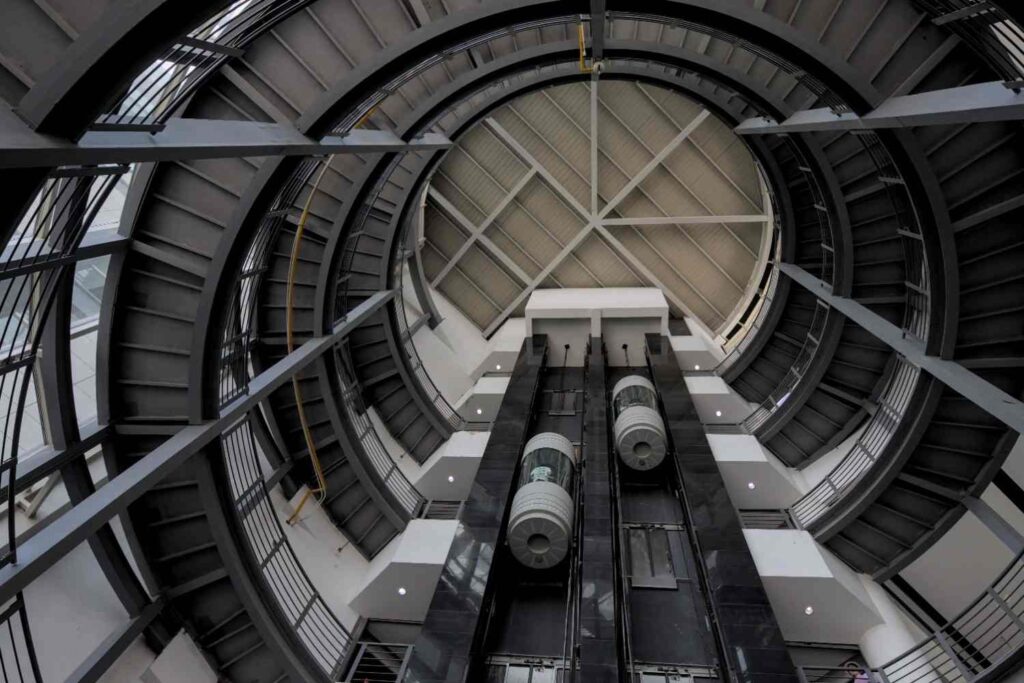
Adopting purpose-built Elevator Service Management Software is the most effective way for Australian lift contractors to guarantee AS 1735 compliance, meet emergency passenger entrapment SLAs, and maximize high-margin overhaul revenue. By replacing paper logbooks and disconnected spreadsheets with a mobile cloud platform, elevator maintenance companies maintain complete audit visibility across every passenger lift, freight elevator, and escalator under their care.
Maintaining elevators across commercial high-rises, residential strata buildings, and industrial facilities carries high legal and operational risk. Under state Work Health and Safety (WHS) regulations, lifts are classified as registered high-risk plant, requiring building owners and maintenance contractors to maintain an unbroken chain of service records.
| Operational Area | Manual Logbook Method | Specialized Elevator Software |
|---|---|---|
| AS 1735 Routines | Paper logbook stored in motor room | Digital cloud asset service log |
| Emergency Entrapments | Unmonitored phone calls and radio | Real-time GPS emergency dispatch |
| Safety Gear Testing | Hand-written technician notes | Digital test reports with photo proof |
| Capital Overhauls | Memory-based component tracking | Automated 5/10-year overhaul alerts |
Relying on physical logbooks stored in motor rooms creates severe compliance exposure. When a WHS inspector or local authority requests maintenance records following a lift malfunction, paper sheets are frequently missing, illegible, or incomplete. Australian contractors who deploy specialized Inspection Software ensure that every routine check, safety gear drop test, and component replacement is recorded digitally with verified timestamps.
The Etaprise Trade Operations Team – field service management specialists with hands-on experience across Australian plumbing, electrical, HVAC, fire protection, commercial cleaning, and elevator maintenance businesses.
Why Do Australian Lift Contractors Need Elevator Service Management Software?
Elevator service management software guarantees AS 1735 compliance by mapping mandatory routine service intervals, door safety checks, and five-yearly load drop tests directly to digital asset logbooks, generating immutable audit records for building owners and WHS regulators. By automating routine inspection checklists on mobile devices, lift contractors ensure that no statutory safety check is missed.
Under Australian Work Health and Safety (WHS) laws, passenger lifts and escalators are classified as registered high-risk plant. Building owners (Persons Conducting a Business or Undertaking, or PCBUs) and their contracted maintenance providers carry a strict legal duty to ensure that all maintenance, testing, and inspections adhere strictly to the AS 1735 series of Australian Standards.
| AS 1735 Service Tier | Mandatory Test Frequency | Key Inspection Items |
|---|---|---|
| Monthly Safety Check | Monthly | Door re-opening devices, leveling, emergency phone, car lighting |
| Quarterly Mechanical Service | 3-Monthly | Brake assembly adjustment, guide shoe wear, door operator chains |
| Annual Safety Inspection | 12-Monthly | Governor trip speed test, buffer inspection, oil reservoir check |
| 5-Yearly Full Load Test | 5-Yearly | Safety gear full-load drop test, brake holding test, rope stretch |
Deploying specialized software for Elevator Maintenance enforces physical compliance in the field. Before a lift technician can complete a monthly service card for a commercial elevator bank in Sydney CBD, the mobile application requires step-by-step verification of critical safety items, including Disability Discrimination Act (DDA) compliance for door dwell times and audible floor indicators under AS 1735.12.
Pro Tip / Operational Compliance
Takeaway: Operating unmaintained high-risk plant or failing to produce verified maintenance records during a WorkSafe audit carries corporate fines of up to $110,000 under state WHS legislation, with personal prosecution risks for company directors. Paper motor room logbooks do not provide adequate legal defense.
Connecting routine inspection forms to your central management system ensures that every completed test automatically updates the elevator’s master compliance file. If a technician identifies a worn governor rope or a faulty door sensor during a quarterly check, the software creates an instant defect report, alerting the office to schedule rectification before the unit suffers a safety shutdown.
How Does Elevator Service Management Software Automate AS 1735 Compliance?
Real-time dispatch eliminates passenger entrapment SLA penalties by instantly locating the nearest qualified lift technician via GPS, routing them to the emergency call-out, and recording timestamped site arrival data directly on mobile job cards. By automating emergency dispatch, elevator contractors consistently meet mandatory 30-minute entrapment response SLAs across their commercial accounts.
Passenger entrapments represent the most critical emergency event in elevator operations. When passengers are trapped in a stalled lift in a high-rise office tower or hospital, building owners face immediate public safety risks and severe commercial penalties if the service provider fails to respond within contractually mandated timeframes.
| Entrapment SLA Category | Target Arrival Window | Operational Dispatch Action |
|---|---|---|
| Priority 1: Passenger Entrapment | Under 30 Minutes | GPS auto-dispatch to nearest technician |
| Priority 2: Full Bank Shutdown | Under 60 Minutes | Re-routes scheduled routine technician |
| Priority 3: Single Lift Outage | Under 2 Hours | Assigns technician within geographic zone |
| Priority 4: Minor Fault / Noise | Same-Day Service | Schedules into afternoon route |
Relying on manual phone calls to locate technicians during an emergency creates dangerous delays. A dispatcher managing a 20-building commercial portfolio in Melbourne CBD might call three technicians before finding one who is not stuck in a pit or performing an annual drop test. Using an automated Dispatch engine, the platform instantly identifies the nearest available technician with the correct competency class and pushes the emergency call-out directly to their mobile device.
PROFIT IMPACT: Commercial elevator contracts typically include liquidated damages penalties ranging from $500 to $1,500 for every hour an entrapment response breaches SLA limits. For a contractor managing 120 elevator shafts, automated GPS dispatch prevents up to $18,000 annually in breached SLA penalties while protecting key commercial contracts.
Equipping technicians with mobile Inspection Software ensures that arrival timestamps, pit access logs, and passenger release confirmations are recorded digitally. The platform automatically sends real-time status updates to the facility manager, confirming when the technician arrives on site and when the lift is safely restored to service, eliminating post-incident contract disputes.
What Features Guarantee Rapid Response to 30-Minute Entrapment SLAs?
Elevator maintenance software captures high-margin capital overhaul revenue by tracking component wear, operating hours, and statutory replacement cycles across every lift asset, automatically generating priced overhaul proposals 90 days before major service deadlines. By systematically flagging aging ropes, worn sheaves, and obsolete controllers, lift contractors secure high-margin capital projects before equipment failures occur.
Elevator contracting profitability depends heavily on capital modernization and component overhauls. While routine monthly contracts provide steady baseline cash flow, major asset overhauls – such as replacing suspension ropes, re-grooving drive sheaves, or upgrading legacy relay controllers to modern VVVF drives – yield project values between $8,000 and $35,000 per elevator shaft at gross margins exceeding 45%.
| Component Category | Typical Replacement Cycle | Inspection Indicator | Capital Project Scope |
|---|---|---|---|
| Suspension Ropes | 5 to 7 Years | Crown wire breaks, diameter reduction | Full rope replacement and tensioning |
| Drive Sheaves | 8 to 12 Years | Sheave groove wear, slippage | Sheave re-grooving or replacement |
| Door Operator Units | 7 to 10 Years | Belt wear, motor noise, slow cycle | Complete door operator modernization |
| Hydraulic Power Unit | 10 to 15 Years | Valve slippage, oil overheating | Power pack overhaul and fluid flush |
| Main Lift Controller | 15 to 20 Years | Component obsolescence, relay failures | Full VVVF controller upgrade |
Without automated asset lifecycle tracking, maintenance contractors frequently miss these major capital opportunities. A technician inspecting a 15-year-old commercial elevator in Brisbane might note significant sheave wear on a paper job card, but if that note is filed away in the office without action, the building owner seeks competitive bids when the lift eventually breaks down, depriving the incumbent contractor of a $22,000 overhaul project.
Integrating asset component tracking into your Elevator Service Management Software turns routine maintenance visits into a predictable capital pipeline. As technicians record rope measurements and sheave wear during routine Elevator Maintenance visits, the platform updates the asset’s health score, alerts the account manager when wear thresholds are breached, and auto-populates a capital proposal using live OEM parts pricebooks from suppliers such as Wittur or Formator.
REVENUE EXPANSION: Field data shows that lift contractors who automate capital overhaul tracking increase their annual contract value by 20% to 30% through proactive modernization proposals. Capturing capital projects before breakdowns occur protects client retention while securing high-margin work.
Automating these proposals also simplifies long-term capital budget planning for strata managers and building owners. By providing building owners with a 3-year forward maintenance plan backed by digital wear logs and photo evidence, contractors position themselves as trusted asset advisors rather than reactive repairers.
How Does Elevator Maintenance Software Accelerate Cash Flow?
Elevator maintenance software accelerates cash flow by connecting mobile job sign-offs, verified routine service logs, and accounting software into an automated digital workflow. By eliminating paper job cards and manual billing delays, elevator maintenance companies reduce their average payment collection cycle from weeks to under 48 hours.
Managing billing for an elevator business involves handling complex multi-tier pricing, including monthly contract maintenance fees, call-out charges, and extra material costs for replacement parts. When office teams rely on manual paper logbooks, collecting work cards and transcribing technician notes into accounting software takes weeks.
Delayed billing locks up critical working capital while increasing the risk of unbilled call-out charges.
Benchmark data from CreditorWatch and Xero Small Business Insights shows that Australian trade contractors using paper-based systems experience average invoice payment delays of 32 to 50 days. For an elevator contractor turning over $2.2 million annually, that administrative lag locks up between $180,000 and $310,000 in working capital at any given time.
| Invoicing Stage | Manual Administration | Automated Field Platform |
|---|---|---|
| Call-Out Verification | Paper job card review | Digital GPS timestamped sign-off |
| Contract Billing | Manual monthly invoice generation | Automated recurring billing engine |
| Extra Parts Invoicing | Manual wholesaler price checks | Instant mobile pricebook sync |
| Debt Collection | Manual aged receivables phone calls | Automated payment reminder emails |
Connecting your mobile field application to your accounting software via two-way API links resolves this cash flow drag. As soon as a technician completes a routine inspection or emergency call-out and captures the building manager’s digital signature on site, the Elevator Service Management Software triggers a draft invoice in Xero or MYOB, attaching digital service sheets and photo evidence.
LEAD-GEN ASSET: Want to calculate how much your elevator business is losing to delayed billing and unbilled call-out hours? Use the Etaprise ROI Calculator to see your projected cash flow recovery in under two minutes.
Streamlining your Dispatch and invoicing workflow also ensures full compliance with statutory payroll updates, including ATO Payday Super requirements effective July 1, 2026, and updated portable long service leave schemes like Victoria’s LeavePlus. Passing verified field hours directly from digital job cards to payroll guarantees that superannuation and industry leave levies are calculated on accurate earnings without manual adjustments.
Your Next Step: Eliminate Compliance Exposure and Protect Overhaul Margins
Elevator maintenance companies relying on paper motor room logbooks pay a heavy price in unmonitored SLAs, compliance risk, and unquoted capital overhauls. With WHS regulators increasing scrutiny on registered high-risk plant, specialized field software is essential for long-term contract retention. Purpose-built Elevator Service Management Software secures your AS 1735 compliance, guarantees emergency entrapment response times, and accelerates your cash flow from a single mobile platform. Book a Free Demo with Etaprise today to see how your lift business can eliminate admin friction and scale profitably.
Ready to Modernise Your Trade Operations?
Eliminate paperwork bottlenecks, automate field compliance, and speed up invoicing across Sydney, Melbourne, Brisbane, and beyond.
Frequently Asked Questions
Elevator-specific software is engineered around WHS high-risk plant regulations and the AS 1735 series of Australian Standards. It manages multi-tier routine inspection frequencies (from monthly safety checks to 5-yearly load drop tests), tracks component lifecycle wear (ropes, sheaves, door operators), automates emergency passenger entrapment dispatch with 30-minute SLA tracking, and integrates OEM parts pricebooks. Generic trade apps handle basic scheduling but lack the specialized compliance logic required for lift engineering.
When a WorkSafe or council inspector requests maintenance documentation, the platform generates a complete, timestamped digital audit log for every elevator and escalator in the building. Instead of searching motor rooms for physical paper logbooks, the platform exports a verified maintenance file containing technician sign-offs, photo evidence, test readings, and rectified defect histories covering the mandatory statutory retention period.
Yes. The mobile application operates with full offline functionality. Lift technicians can complete AS 1735 inspection cards, capture rope wear measurements, log replacement parts, and obtain building manager signatures even when working in underground elevator pits, concrete shafts, or remote plant rooms without mobile reception. All data syncs automatically to the office cloud server as soon as the device reconnects to a network.
The software evaluates call-out timestamps, technician arrival times, and contract terms automatically. If a call-out falls outside regular hours or represents an out-of-scope repair, the system applies the correct contract labor rate and material costs, generating a draft invoice in Xero or MYOB with attached service sheets as soon as the technician completes the job.
Most 10 to 30-technician elevator contractors complete asset migration, client account setup, and field onboarding within 7 to 14 business days. Implementation specialists import your building equipment registers, pre-load AS 1735 inspection templates, configure OEM pricebooks (from Wittur or Formator), and conduct hands-on mobile training for your field engineers and dispatchers. In conclusion, purpose-built Elevator Service Management Software gives Australian lift contractors the regulatory compliance precision, emergency dispatch speed, and cash flow control required to build a scalable, audit-ready trade business across every commercial and residential property portfolio.