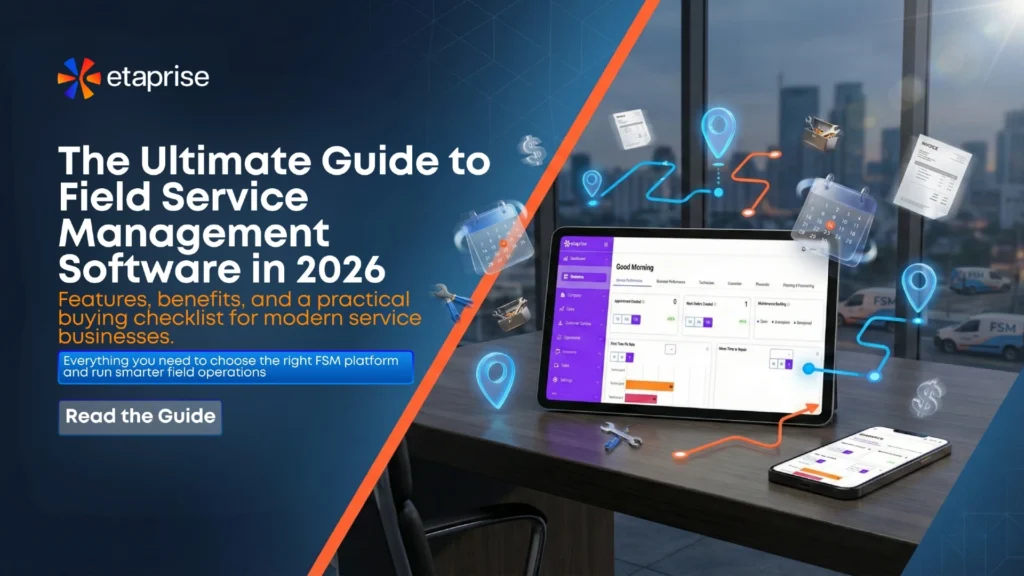
Field service has changed. Customers want faster visits. Managers want better control. Technicians want fewer phone calls and clearer job details. And everyone wants to get paid on time.
That’s why field service management software has become essential in 2026.
Whether you operate a plumbing company in the US, an HVAC team in Australia, or a maintenance business in Singapore, Malaysia or the Philippines, a good FSM platform can significantly improve the ease, speed, and predictability of your daily operations.
This guide explains the real impact of FSM software, the essential features, and the selection of a system that suits your business.
What Is Field Service Management Software?
Apart from the jargon, FSM software is basically your service business management tool at a single location.
Instead of handling spreadsheets, phone calls, and different apps, you have everything unified in one system:
Job scheduling and dispatch
- Technician updates
- Customer and service history
- Route planning
- Invoicing and payments
It gives managers visibility, technicians clarity, and customers a better experience.
Why FSM Software Matters in 2026
Running a service business today is harder than it used to be.
Jobs come in faster. Schedules change constantly. Fuel and labour costs keep rising. Customers expect real-time updates.
Manual systems can’t keep up.
Companies that switch to modern FSM platforms usually see:
- Fewer missed or late appointments
- Better use of technician time
- Faster job completion
- Fewer repeat visits
- Quicker billing and payments
In short, FSM software helps you protect margins while delivering better service.
The Features That Actually Matter
Not every feature on a product page is important.Those are the ones that really impact how things get done daily.
Smart Scheduling and Dispatch
Excellent scheduling software plays a major role in promoting good customer service, as it assures that the right person for the job will be there at the right time. They take into account the skills required, the technician’s location, availability, and the urgency of the job. This way, timelapses are reduced up to zero, no double bookings, and hence work keeps flowing without any troubles.
Field Job Status
It is very important to know what is going on in the field at all times.If managers get real, time updates, they will know exactly the status of the job, they will be able to solve problems very fast, and customers can be kept in the loop without a need for a lot of phone calls.
Customer and Service History
When technicians arrive prepared, jobs get done right the first time. Access to past repairs, equipment details, and notes reduces mistakes and repeat visits.
Route Planning
Better routes mean less driving and more work done. Route optimization saves fuel, reduces overtime, and helps technicians finish more jobs each day.
On-Site Invoicing
Billing at the job site changes everything. Technicians can create invoices, collect signatures, and accept payments before leaving. That means fewer delays and healthier cash flow.
Simple Reporting
Managers need answers, not complicated charts. Clear dashboards showing job status, productivity, and revenue make it easier to spot problems and improve performance.
What You Gain From FSM Software
When the system works well, the impact is immediate.
- Schedules become easier to manage
- Technicians waste less time
- Customers get faster, more reliable service
- Payments come in sooner
- Managers finally have full visibility
FSM software doesn’t just organise work — it brings control back to the business.
How to Choose the Right FSM Software
There are many tools on the market. The best one is not the one with the longest feature list. It’s the one that fits your workflow.
Here’s a simple checklist to guide your decision.
Buying Checklist for 2026
Before choosing a platform, ask:
- Is it built for my type of service business?
- Is it easy for technicians to use on mobile?
- Can it handle last-minute schedule changes?
- Does it optimize routes automatically?
- Can I see full customer and job history?
- Does it support on-site invoicing and payments?
- Are reports clear and useful?
- Will it scale as my team grows?
If the answer is yes to most of these, you’re on the right track.
Where Platforms Like Etaprise Come In
Modern FSM platforms are moving toward one clear goal: everything in one place.
Platforms like Etaprise now combine:
- Scheduling and dispatch
- Customer and service records
- Route planning
- Live job updates
- Invoicing and payments
—all in a single dashboard.
This kind of setup removes confusion, reduces manual work, and gives managers a real-time view of what’s happening across the business.
What Defines the Best FSM Tools in 2026?
The strongest platforms today share a few qualities:
- They are easy to use
- They work well on mobile
- They give real-time visibility
- They reduce manual tasks
- They grow with your business
There is no perfect tool for everyone. The right choice depends on how your team works and where you want your business to go.
Final Thoughts
Field service management software is no longer optional. In 2026, the companies that succeed will be the ones that run tighter schedules, give technicians better tools, serve customers better, and get paid faster.
The right FSM platform helps you do all of that — without adding complexity.