
Equipment Maintenance & Repair
Equipment Installation
Quality Control Inspection
Equipment Maintenance & Repair
Industrial manufacturing operations often require complex field service activities, from equipment maintenance and repair to installations and quality control inspections. Etaprise FSM software can be a powerful tool to streamline these tasks, improve efficiency, and reduce costs.
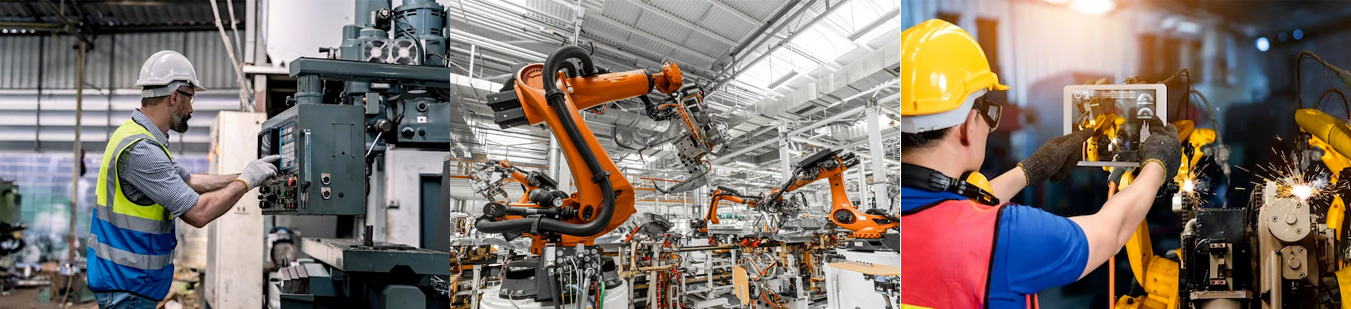
Equipment Maintenance
- Preventive maintenance scheduling and tracking: Schedule and manage preventive maintenance tasks based on usage data, sensor readings, and manufacturer recommendations.
- Work order management: Create, assign, and track work orders for repairs, inspections, and calibrations.
- Inventory management: Track and manage spare parts, tools, and equipment needed for maintenance tasks.
- Mobile access for technicians: Provide technicians with mobile apps for accessing work orders, capturing data (photos, readings), and communicating with supervisors in real-time.
- Predictive maintenance: Utilize sensor data and analytics to identify potential equipment issues before they occur, preventing breakdowns and minimizing downtime.
Repair Management
- Break down management: Quickly diagnose and resolve equipment failures, minimizing downtime and production losses.
- First-time fix rate improvement: Empower technicians with access to knowledge bases, repair manuals, and historical data for efficient troubleshooting.
- Repair cost tracking and analysis: Track and analyze repair costs to identify areas for improvement and optimize maintenance strategies.
- Vendor management: Manage relationships and contracts with equipment vendors and repair service providers.
- Compliance management: Ensure adherence to safety regulations and equipment certifications through the FSM platform.
Equipment Installation

Pre-Installation Planning and Coordination
- Project management: Create, manage, and track installation projects with detailed timelines, resource allocation, and budget planning.
- Site survey and preparation: Manage site assessments, document pre-installation requirements, and coordinate with facility teams for necessary preparations.
- Logistics and material management: Track and manage equipment, tools, and materials needed for installation, optimizing delivery and avoiding delays.
- Subcontractor management: Assign tasks, manage contracts, and track performance of subcontractors involved in the installation process.
Installation Execution and Monitoring
- Real-time visibility: Track installation progress in real-time with mobile apps, status updates, and location tracking.
- Digital checklists and procedures: Ensure adherence to standard installation procedures and track completion of critical tasks.
- Data capture and reporting: Collect and store installation data (photos, videos, sensor readings) for future reference and quality control.
- Communication and collaboration: Facilitate communication between installation teams, supervisors, and other stakeholders for problem-solving and efficient coordination.
- Remote guidance and support: Provide real-time support and troubleshooting assistance to installation teams remotely through video calls or expert consultations.
Post-Installation and Commissioning:
- Punch list management: Efficiently track and complete post-installation tasks and adjustments.
- Performance testing and documentation: Conduct performance tests, document results, and generate reports for quality assurance.
- Warranty and service activation: Manage warranty registration, activate service contracts, and set up preventive maintenance schedules.
- Customer handover and feedback management: Facilitate smooth handover of installed equipment, collect customer feedback, and address any concerns.
Quality Control Inspection

 Inspection Planning and Preparation
- Inspection scheduling and assignment: Create, schedule, and assign QC inspections based on pre-defined criteria, production stages, or risk assessments.
- Inspection checklists and forms: Utilize digital checklists and forms tailored to specific products, processes, or inspection points.
- Calibration management: Track and manage calibration schedules for QC instruments, ensuring accuracy and compliance.
- Mobile access for inspectors: Equip inspectors with mobile apps for accessing checklists, recording data, capturing photos and videos, and submitting reports in real-time.
Inspection Execution and Data Capture
- Offline data collection: Capture QC data even in areas with limited connectivity through offline capabilities in mobile apps.
- Data validation and error checking: Built-in features can validate data against pre-defined parameters and flag potential inconsistencies.
- Non-conformance management: Identify and document non-conformance issues with photos, videos, and detailed descriptions.
- Corrective action management: Assign and track corrective actions for identified non-conformances, ensuring timely resolution.
Reporting and Analysis
- Real-time reporting and dashboards: Track inspection progress, identify trends, and monitor overall QC performance in real-time dashboards.
- Detailed inspection reports: Generate reports with complete inspection data, photos, videos, and non-conformance details for record-keeping and analysis.
- Data analysis and trend identification: Leverage data analytics to identify recurring issues, assess process effectiveness, and predict potential quality risks.
- Continuous improvement: Utilize insights from QC data to refine procedures, improve training, and optimize product quality.
