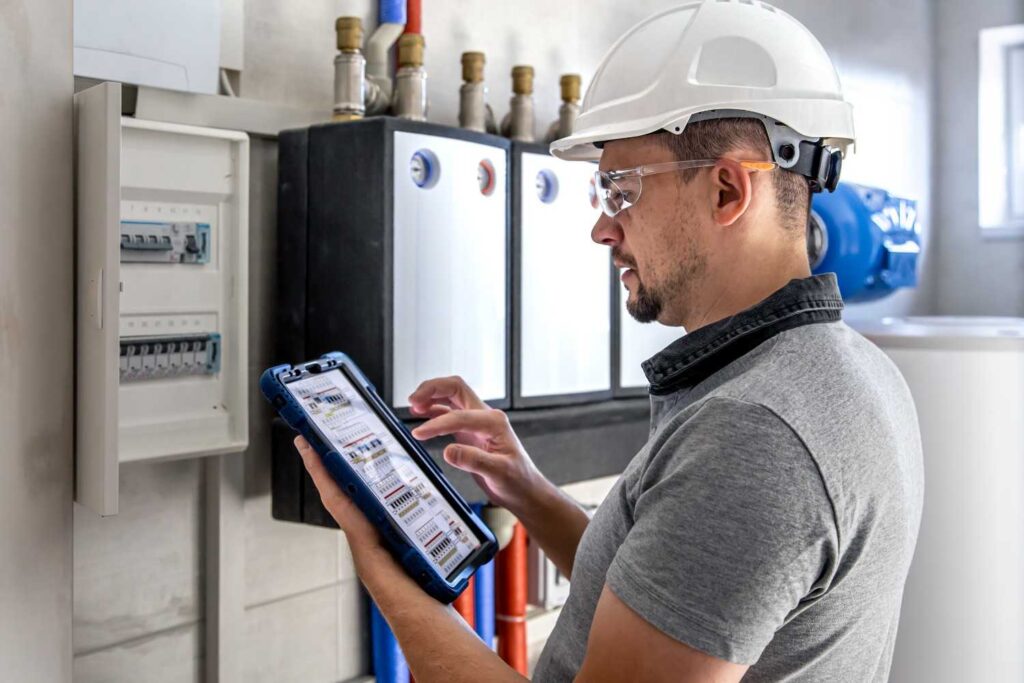
Managing a heating, ventilation, and air conditioning business in Australia requires balancing a unique set of technical, regulatory, and operational challenges that hvac software australia is built to handle. From coordinating emergency breakdown repairs during peak summer heatwaves to managing multi-year preventative maintenance contracts for commercial high-rises, the administrative burden on an HVAC fleet manager is immense. Relying on paper diaries, disconnected spreadsheets, and fragmented accounting tools is no longer a viable strategy for businesses looking to scale or protect their profit margins. This guide explores how deploying the right hvac software australia provides technicians with the critical asset data they need, ensures compliance with national regulations like ARCtick, and transforms a reactive service department into a highly profitable, data-driven operation.
1. What Is hvac software australia Contractors Rely On?
HVAC service management software is a specialized digital platform designed to centralize and automate the day-to-day operations of an air conditioning and refrigeration business. At its core, the software handles the fundamental requirements of any field trade: booking jobs, scheduling technicians, dispatching work orders to a mobile app, generating quotes, and processing final invoices. However, what sets HVAC-specific platforms apart from generic trade apps is their deep capability to manage recurring maintenance schedules and complex asset registries.
When a technician arrives at a commercial site, they are rarely there to service a single, isolated unit. They are often responsible for inspecting, testing, and maintaining dozens of interconnected assets, from rooftop chillers and cooling towers to split systems and ductwork components. HVAC service software tracks the complete service history of each individual asset, including installation dates, warranty expirations, previous refrigerant leak repairs, and specific make and model details. This ensures that the technician has immediate access to critical technical data before they even step out of their van. Furthermore, these platforms automate the creation of recurring maintenance tasks, ensuring that contractual service level agreements (SLAs) are met without relying on manual calendar reminders or physical whiteboards.
2. Why Generic Job Management Software Fails HVAC Contractors
Many HVAC businesses start out using a basic job management tool because it is inexpensive and easy to implement. A generic platform works perfectly well if your entire business model consists of installing residential split systems where each job is a one-off transaction. You receive a call, you quote the installation, you complete the work, and you send the invoice. The relationship with the asset ends when the payment clears. However, the moment your business transitions into commercial servicing, preventative maintenance, or complex diagnostic repairs, a generic tool becomes a significant operational bottleneck.
The most glaring failure of basic field service management software australia platforms when applied to the HVAC industry is their inability to handle parent-child asset relationships. A commercial building is not a single location with a single task; it is a complex hierarchy of mechanical equipment. A generic tool might allow you to schedule a “maintenance visit” for the building, but it will not allow you to individually log the refrigerant charge added to Chiller Unit B on the roof versus the filter replacement on Fan Coil Unit 4 on the third floor. Without granular asset-level tracking, your business cannot accurately report on equipment failure rates, provide proactive replacement recommendations to your clients, or defend yourself against warranty claims. Furthermore, generic platforms typically lack the capability to manage complex, multi-tiered maintenance contracts where different assets on the same site require different servicing intervals, such as monthly filter checks versus annual deep diagnostic teardowns.
3. How Does Commercial HVAC Maintenance differ from Residential?
The operational gap between servicing a residential split system and maintaining a commercial HVAC infrastructure is vast, and your software must bridge that gap entirely. Residential work is typically characterized by high-volume, low-complexity jobs. A technician is dispatched to diagnose a fault, replace a capacitor, or clear a blocked drain line. The primary operational challenge in residential HVAC is managing routing efficiency, optimizing the daily schedule, and ensuring rapid payment collection on site. The administrative burden is focused on speed and volume rather than deep technical documentation.
Commercial HVAC maintenance operates on a completely different paradigm. It is defined by long-term contractual obligations, stringent site access protocols, and complex compliance reporting. When taking on a commercial preventative maintenance contract, a business is committing to a schedule of rigorous, recurring inspections designed to prevent catastrophic equipment failure and ensure the building meets indoor air quality standards. The best job management software australia offers for commercial contractors must automatically handle recurring task generation based on specific service level agreements. It must also support the creation of detailed, site-specific safety plans and ensure that technicians can generate comprehensive PDF reports detailing exactly what was inspected, the current operating parameters of the equipment, and photographic evidence of any identified wear and tear. A failure in commercial maintenance tracking does not just lead to an unhappy customer; it can result in breached contracts, significant financial penalties, and compromised building safety.
4. Managing Asset Histories and Preventative Maintenance
A commercial HVAC contractor does not just manage technicians; they manage data. The ability to maintain an accurate, easily accessible history of every asset under contract is the foundation of a profitable maintenance department. Without software to centralize this information, technicians are forced to diagnose complex mechanical issues blindly, relying on handwritten notes left inside the control panel or attempting to call the office to decipher poorly filed service reports from three years prior. This lack of visibility severely degrades the first time fix rate and wastes valuable billable hours on redundant troubleshooting.
Purpose-built HVAC platforms resolve this by creating a digital twin of the site’s asset infrastructure. Every chiller, air handler, boiler, and exhaust fan is logged with its own unique digital profile, often linked to a scannable QR code affixed directly to the physical unit via hvac software australia. When a technician scans the barcode using their mobile app, they immediately access the entire service history of that specific machine. They can see exactly when the compressor was last replaced, review the baseline pressure readings from the previous season, and check the warranty status of major components. This level of granular asset management is critical for preventative maintenance. By analyzing historical performance data and repair frequency, fleet managers can shift their strategy from reactive break-fix responses to proactive capital replacement planning. Instead of waiting for a twenty-year-old cooling tower to fail mid-summer, the software provides the data necessary to present the client with a strategic, budgeted replacement proposal during the off-season.
5. Why is ARCtick Compliance Critical for Australian HVAC Businesses?
Operating an HVAC business in Australia carries a unique set of strict regulatory burdens that contractors in other regions simply do not face. The most prominent of these is compliance with the Australian Refrigeration Council (ARCtick) regulations. Under Australian law, any technician handling ozone-depleting substances or synthetic greenhouse gases must hold a valid Refrigerant Handling Licence, and the business itself must hold a Refrigerant Trading Authorisation. Failing to track and document the purchase, usage, recovery, and disposal of refrigerants is not merely an administrative oversight; it is a federal offense that can result in crippling fines and the immediate suspension of trading licenses.
A dedicated software platform transforms ARCtick compliance from a stressful, error-prone manual chore into an automated, invisible part of the daily workflow. When a technician adds or recovers refrigerant during a service call, the mobile app mandates the entry of exact gas weights, gas types, and the specific cylinder barcode used before the job can be marked as complete. This data instantly updates the central business database, generating a flawless, audit-ready digital log. If an ARCtick inspector requests your quarterly refrigerant usage report, compiling that data should take three clicks and fewer than two minutes. Relying on paper logbooks scattered across the dashboards of a dozen different service vans is a catastrophic risk. Modern platforms ensure that compliance is enforced at the point of service, completely removing the element of human forgetfulness from your regulatory obligations.
6. Optimizing Real-Time Routing for Emergency Call-Outs
While preventative maintenance provides the financial stability of recurring revenue, emergency breakdown service remains a highly profitable and highly demanding component of the HVAC industry. When a commercial refrigeration rack fails at a major supermarket, or a hospital’s primary chiller goes offline in the middle of a January heatwave, the client does not care about your routing challenges. They require an immediate, competent response. Managing these critical, high-stress dispatch scenarios manually requires a dispatcher to simultaneously cross-reference technician locations, assess current traffic congestion, verify individual technician skill sets, and confirm whether the required spare parts are stocked in the closest van.
The most advanced hvac software australia contractors use today removes the guesswork from emergency dispatching by leveraging real-time data and artificial intelligence. When an urgent breakdown call is logged, the system instantly analyzes the GPS coordinates of the entire fleet. However, it does not simply suggest the closest technician geographically. The software evaluates which technician is closest to finishing their current non-urgent task, cross-references their specific licensing and endorsements to ensure they are legally permitted to work on the broken equipment, and checks their van inventory for the necessary diagnostic parts. This intelligent optimization ensures that the most qualified person arrives on site in the shortest possible time. Furthermore, the system can automatically send an SMS notification to the waiting client, providing a live tracking link and an accurate estimated time of arrival, which drastically reduces inbound phone calls and manages client anxiety during critical equipment failures.
7. What features should you look for in HVAC Scheduling Software?
Selecting the right platform requires looking past glossy marketing materials and evaluating how the technology will actually perform under the stress of an Australian summer. The foundation of any robust system is a dynamic, highly visual dispatch board. Your dispatcher must be able to view the status of fifty technicians simultaneously, immediately identifying who is traveling, who is actively on site, and who is delayed. The hvac scheduling software you choose must allow for drag-and-drop reassignment that instantly updates the technician’s mobile app without requiring a phone call or a manual sync process.
Beyond basic dispatching, prioritize platforms that offer deep preventative maintenance automation. The system must be capable of generating recurring work orders automatically based on the specific cadence dictated by your client contracts, whether that involves monthly filter swaps or annual chiller teardowns. Secondly, demand comprehensive offline capabilities for the mobile application. HVAC technicians frequently work in basement plant rooms, concrete sub-floors, and roof cavities where cellular reception is non-existent. If the mobile app cannot capture asset barcodes, compliance signatures, and job notes while offline, your technicians will be forced back to using paper. Finally, evaluate the platform’s custom form builder. You must be able to digitize your existing Safe Work Method Statements (SWMS) and Job Safety Analyses (JSA) natively within the app, ensuring that technicians are forced to complete mandatory safety checks before the system allows them to clock onto a high-risk commercial site.
8. Job Costing and Accounting Integration (Xero/MYOB)
Even the most efficient operational workflow is useless if it does not translate into accurate financial data. The complexity of commercial HVAC work means that profitability can easily be destroyed by uncaptured material costs, unrecorded overtime hours, or poorly managed subcontractor expenses. Waiting until the end of the month to reconcile these costs within your accounting software guarantees that you will miss critical opportunities to recover margin. To protect the financial health of the business, your service platform must execute real-time, highly detailed job costing on every single work order.
This requires a flawless, bidirectional integration with primary Australian accounting platforms like Xero and MYOB, a staple feature of the best hvac software australia. When a technician adds three meters of copper pipe and a specific contactor relay to a job card via their mobile app, that inventory movement must immediately reflect in the total job cost. When the invoice is finalized in the field, it must push directly into Xero, complete with the correct tax codes, labor rate classifications, and ledger account mappings. This deep integration eliminates the need for manual dual data entry by your administration team, drastically reducing the time it takes to issue an invoice and collect payment. More importantly, it provides the fleet manager and business owner with immediate visibility into the gross margin of every job the moment the technician drives away from the site. If a specific type of maintenance contract is consistently losing money due to excessive labor hours, a deeply integrated system will highlight that failure instantly, allowing you to renegotiate the terms or optimize the workflow before the financial damage compounds.
9. Frequently Asked Questions
Can general trade software handle commercial HVAC maintenance?
General trade software is excellent for basic dispatching and invoicing, but it typically fails in commercial HVAC environments. It lacks the ability to track granular parent-child asset relationships, manage complex recurring maintenance schedules, and generate trade-specific compliance documentation like ARCtick logbooks. Using dedicated hvac software australia contractors trust ensures these critical functions are handled natively.
What is the most important feature for HVAC field technicians?
Full offline capability is the most critical feature. HVAC technicians frequently work in basement plant rooms and roof cavities where cellular reception is unavailable. If the mobile app cannot capture signatures, barcode scans, and asset notes offline and sync them later, the software becomes entirely useless at the point of service.
How does software help with ARCtick compliance?
Purpose-built software forces technicians to log refrigerant weights, cylinder numbers, and gas types directly into the job card before the work order can be closed. This creates an automated, digital, and audit-ready logbook that completely replaces error-prone paper tracking, ensuring you are always compliant with federal regulations.
Will new software integrate with my existing Xero account?
Yes, the vast majority of modern platforms offer deep integration with Xero. The best platforms go beyond simply pushing a final invoice; they map individual labor rates, separate material costs, and sync purchase orders bidirectionally, providing you with real-time job costing data without requiring manual data entry.
How long does it take to implement a new platform across a fleet?
For a mid-sized commercial HVAC contractor managing ten to twenty technicians, full implementation of hvac software australia typically takes between four and six weeks. This timeline includes importing your existing asset registries, mapping your maintenance contracts, configuring your digital SWMS, and conducting targeted training sessions for your field staff.
| Profit Example | Manual System | With Software | Time Saved |
| ARCtick log processing | 45 min per tech | 0 min (Automated) | 45 min |
| Job costing reconciliation | 30 min per job | 2 min per job | 28 min |
| End of month invoicing | 4 days | 1 day | 3 days |
| Preventative scheduling | 2 days | 2 hours | 14 hours |