
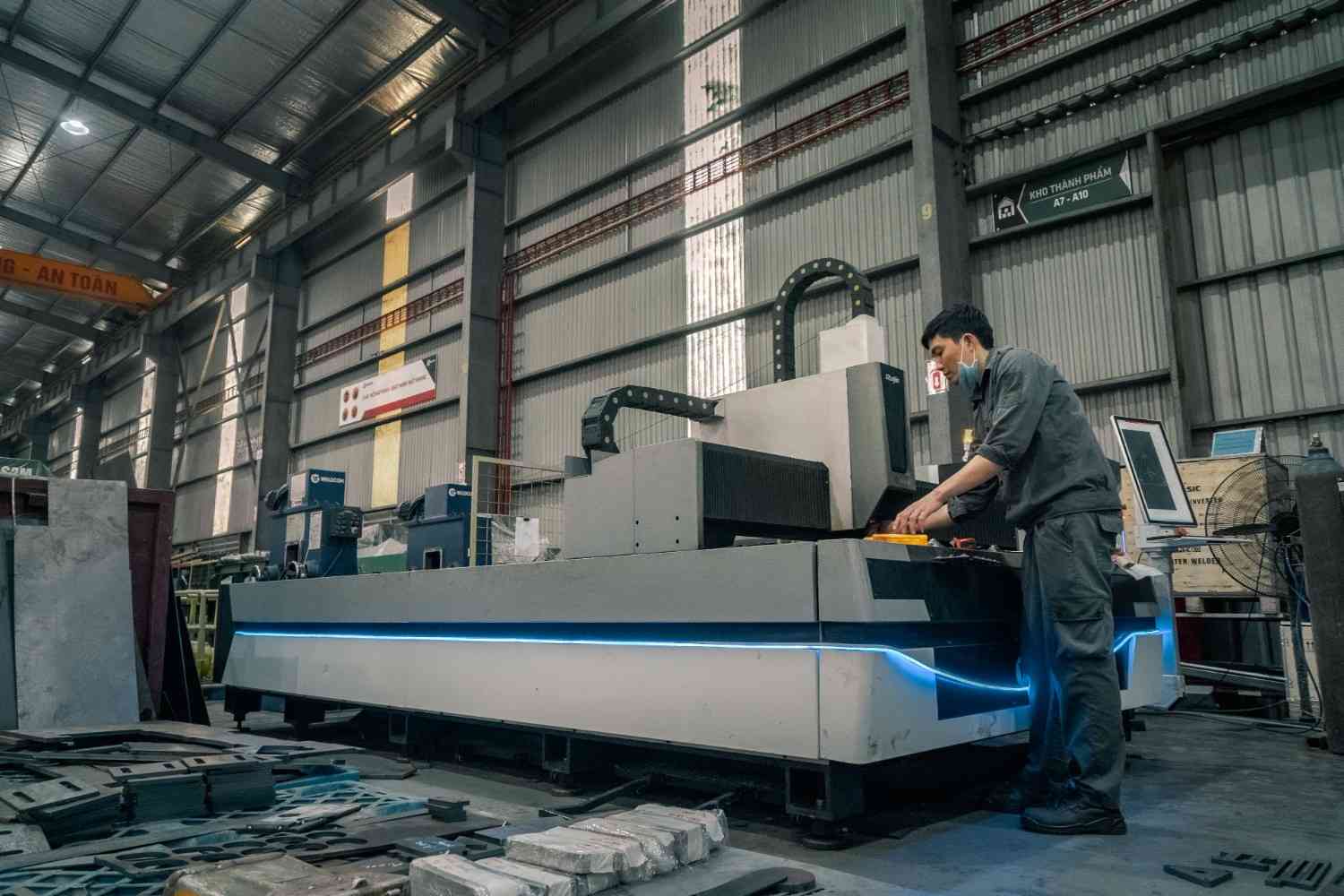
In a large manufacturing facility in Newcastle, New South Wales, a critical hydraulic press went down at 2:47 pm on a Thursday. The machine operator reported the fault verbally to the shift supervisor. The supervisor wrote it in a log book. The maintenance coordinator found the log book entry the following morning. By the time a technician arrived with the right parts, the line had been down for nineteen hours. The fault itself took forty-five minutes to fix. The communication failure cost the business more than $120,000 in lost production.
This is the problem that manufacturing communication FSM software is built to eliminate. Not the fault — faults are unavoidable in any industrial environment. The nineteen hours of silence between a known fault and a dispatched technician is entirely preventable, and manufacturing communication FSM software is precisely the tool that prevents it. When every stakeholder in the maintenance chain — from the machine operator to the field technician to the plant manager — operates on the same real-time system, the response time for critical faults drops from hours to minutes.
What is manufacturing communication FSM software and why does it matter in 2026?
Manufacturing communication FSM software is a field service management platform that integrates real-time messaging, automated fault alerts, work order creation, and technician dispatch into a single system connected to the plant floor. In traditional manufacturing environments, communication happens across four or five disconnected channels: verbal handover, paper log books, email chains, and phone calls. Manufacturing communication FSM software replaces all of these with a single source of truth that every team member accesses from their device in real time.
In 2026, the case for manufacturing communication FSM software has never been stronger. Australia is facing a 300,000-worker shortage across technical and trades sectors, which means manufacturing facilities cannot afford to waste experienced technician time on miscommunication and repeat call-outs. Manufacturing communication FSM software ensures every technician arrives on site with complete context — the fault history, the asset maintenance record, the parts likely required, and the safety protocols for that specific equipment — before they step onto the factory floor.
The distinction between manufacturing communication FSM software and a simple group chat is significant. Manufacturing communication FSM software creates a structured, auditable record of every communication and action taken against a fault event. A WhatsApp message has no audit trail. Manufacturing communication FSM software does — and that audit trail is increasingly required by WHS regulators and quality management auditors across Australian industry.
How does manufacturing communication FSM software reduce fault response times?
The fault response timeline without manufacturing communication FSM software is painfully familiar to any maintenance manager: fault occurs, operator tells supervisor, supervisor finds coordinator, coordinator creates a ticket, ticket gets assigned, technician is dispatched. Each handover introduces a delay. Each delay has a cost. Manufacturing communication FSM software collapses this chain entirely by automating the handover between each step.
When a sensor on a conveyor motor triggers an anomaly alert, manufacturing communication FSM software creates a work order automatically, assesses which certified technician is nearest the asset, and sends them a notification with the full fault brief within seconds. The operator and shift supervisor receive an acknowledgement simultaneously. The maintenance manager sees the dispatch confirmed on their dashboard. Everyone is informed, nobody is waiting, and the technician is already moving before anyone has picked up a phone. That is the operational difference manufacturing communication FSM software delivers.
Manufacturing Communication FSM Software: Fault Response Comparison
| Communication Method | Avg Fault Response | Annual Downtime Hours | Production Loss (est.) |
| Paper log + phone calls | 4-8 hours | 340 hrs | $5.1M (at $15,000/hr) |
| Email + spreadsheet system | 2-4 hours | 190 hrs | $2.85M |
| Standalone maintenance app | 1-2 hours | 90 hrs | $1.35M |
| Manufacturing Communication FSM Software | 15-45 mins | 22 hrs | $330,000 |
Where does manufacturing communication FSM software sit in a broader digital strategy?
Manufacturing communication FSM software does not exist in isolation. In a fully connected manufacturing environment, it is the human layer sitting above the sensor network and below the executive reporting dashboard. Manufacturing communication FSM software receives data from IIoT sensors and SCADA systems, translates it into actionable work orders, and ensures those work orders reach the right people with the right information at the right time. Once work is completed, manufacturing communication FSM software captures outcome data and feeds it back into the predictive analytics engine — preventing the next fault before it occurs.
This closed loop from sensor data through work order through technician action through outcome capture is what distinguishes manufacturing communication FSM software from a simple messaging app. It is not just a way for people to talk to each other. It is a system of record for every maintenance event in the facility, creating a cumulative asset intelligence database that becomes more valuable with every job logged. Australian manufacturers adopting manufacturing communication FSM software are not just solving today’s communication problem — they are building tomorrows maintenance intelligence.
Why does manufacturing communication FSM software matter for WHS compliance?
Work Health and Safety obligations in Australian manufacturing environments are extensive. Safe Work Method Statements, lockout/tagout verification, confined space entry permits, and hot work authorisations each require documented sign-off before work begins. Without manufacturing communication FSM software, these requirements are managed on paper — vulnerable to loss, incomplete completion, and chain-of-custody disputes. Manufacturing communication FSM software embeds WHS compliance directly into the work order workflow.
Before a technician can mark a job started, manufacturing communication FSM software confirms their certification for that work type, requires the relevant permit to be completed and digitally signed by the authorised person, and logs the GPS location and timestamp. If the technician attempts to start work before the permit is signed, manufacturing communication FSM software flags the breach immediately and notifies the safety officer. This is compliance enforced by the system rather than trusted to individual memory — a fundamental shift in risk management for Australian manufacturers.
From 1 July 2026, the Payday Super mandate means every hour logged against a job code in manufacturing communication FSM software is automatically captured for STP Phase 2 reporting and super calculation. Facilities managers who coordinate both maintenance and payroll compliance find that manufacturing communication FSM software eliminates the double-handling between these two functions entirely.
How does Sovereign AI compliance apply to manufacturing communication FSM software?
An increasing number of Australian manufacturing contracts — particularly in defence supply chain, food safety, and pharmaceutical sectors — now specify data sovereignty requirements. Manufacturing communication FSM software that stores all maintenance records, technician communications, work order data, and asset history on Australian servers meets the Sovereign AI compliance standard these contracts require. Facilities using overseas-hosted communication tools risk non-compliance with data residency clauses that are becoming standard in tier-one manufacturing procurement across NSW and Victoria.
FAQ: Manufacturing Communication FSM Software
Can manufacturing communication FSM software integrate with existing ERP systems like SAP or Oracle?
Yes — modern manufacturing communication FSM software platforms are built with standard API integration layers that connect with major ERP systems including SAP, Oracle, and Microsoft Dynamics. Work orders created in the FSM platform are automatically reflected in the ERP maintenance module, purchase orders for parts are triggered within the ERP procurement workflow, and labour cost data flows back for accurate job costing. The integration eliminates double-entry between maintenance management and enterprise resource planning.
How does manufacturing communication FSM software handle shift handovers?
Shift handover is one of the highest-risk moments in any manufacturing operation. Manufacturing communication FSM software replaces verbal and paper-based handovers with a structured digital handover that captures all open work orders, in-progress faults, safety alerts, and deferred maintenance items in a single dashboard. The incoming shift supervisor reviews the handover on their device, acknowledges it with a digital signature, and takes ownership of all open items. Nothing is missed, nothing is misheard, and the handover record is permanently stored for audit purposes.
What training is required for technicians to use manufacturing communication FSM software?
Manufacturing communication FSM software platforms are designed for maintenance technicians who are experts in their equipment, not in software. The mobile interface typically requires no more than two to four hours of guided training to cover the core workflows: receiving a work order, reviewing the fault brief, completing safety permits, logging the work performed, and closing the job. Facilities that run a structured one-day onboarding session typically achieve full team adoption within the first week.
Does manufacturing communication FSM software work where Wi-Fi coverage is limited?
Manufacturing environments — particularly large processing plants, cold storage facilities, and underground mining operations — often have patchy wireless coverage in specific areas. Manufacturing communication FSM software built with offline-first mobile architecture caches all active work orders, asset records, and safety permit templates on the technician’s device before they enter a low-coverage area. Work completed offline is synchronised automatically when connectivity is restored, ensuring no data is lost and the maintenance record remains complete.
How does manufacturing communication FSM software scale across multiple facilities?
Enterprise-grade manufacturing communication FSM software is built for multi-site management from the ground up. A centralised dashboard gives maintenance directors and operations managers visibility across all facilities in a single view — showing real-time fault status, technician locations, open work orders, and key performance metrics like Mean Time to Repair and First-Time Fix Rate for each site. Permissions can be configured so site supervisors see only their own facility, while regional managers see the full picture.